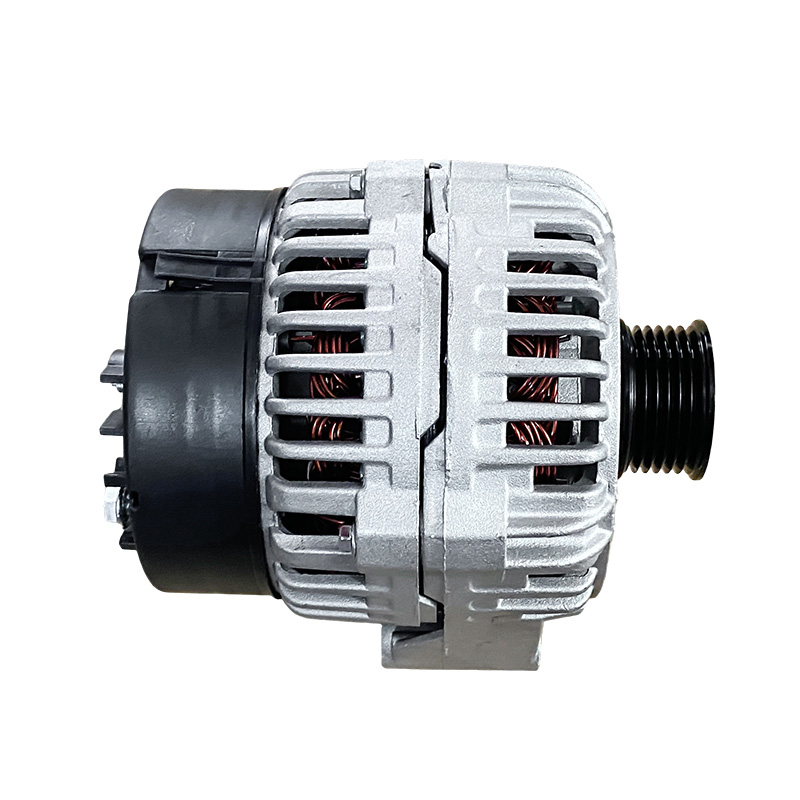
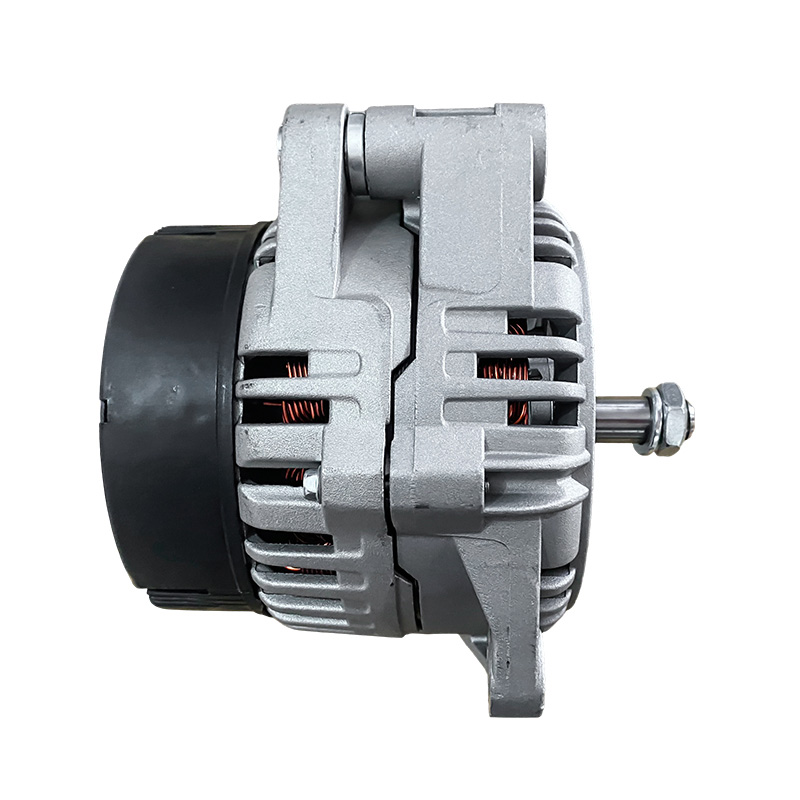
English

Need Help Now? Call Us!
+86-0510-83880396
Our team proudly offers an on-time guarantee and a 100% customer satisfaction guarantee.
Contact Online


 Home / News / Industry News / What Alternator Cost Really Covers: Parts, Labor, and Heavy-Duty Price Drivers
 2026.11.09
 Industry News
A workshop quotes 780 dollars to replace the alternator on a compact sedan. The unit itself retails at roughly 190 dollars, a belt and tensioner add 70, and the remaining 520 covers diagnosis, access time, warranty margin and the risk the shop carries for touching a charging system it did not build. That split is the whole story of alternator cost: the part is rarely the largest line on the invoice, but it is the line that decides whether the repair lasts another 150,000 km or comes back in eight months.
For a passenger car, expect about 120 to 350 dollars for the unit and 320 to 1,000 dollars installed, depending on output, packaging and how much has to be dismantled to reach it. For 24V heavy-duty units on trucks, excavators and tractors, the part alone typically runs 240 to 900 dollars, and the installed figure is driven more by machine downtime than by hourly labor.
The working conclusion
Alternator cost is set by three variables in strict order: rated output and housing complexity, access time on the machine, and the accuracy of the fitment match. Buyers who control the third variable almost always win on the first two, because a correctly cross-referenced unit removes the second removal, the second gasket set and the second hour of labor.
Content
Quoted prices vary widely for the same vehicle because three different cost layers get mixed into one number. Separating them makes a quote comparable.
Housing, stator, rotor, rectifier bridge, regulator and pulley. Output class dominates: a 70A unit is a commodity item, while a 200A unit with a heavy-duty regulator and dual internal fans is not. Production volume then decides the rest.
Book time is set by what must come off first: belt, tensioner, intake piping, cooling fan, sometimes the shroud. A transverse V6 layout can take twice the hours of a longitudinal four-cylinder for the same part.
The expensive layer. Two units with identical output and an identical bolt pattern can still differ in pulley offset or regulator protocol. A mismatch is paid for twice, and the second charge is labor, not parts.
The figures below are typical replacement-market ranges, not list prices. They shift with region, core charges and whether the unit is new, remanufactured or an OE-cross replacement.
Indicative replacement-market ranges for parts and labor, updated for 2026; core charges, freight and machine downtime are excluded. Off-highway totals assume field service rather than workshop access.
Amperage is a rough but dependable proxy for price. Doubling rated output typically multiplies unit cost by two to three times, because the stator winding, rectifier bridge and cooling surface all have to grow with it. Relative cost by output class, indexed to a 70A baseline of 100, looks like this:
Relative unit cost index by rated output, 70A baseline = 100. Housing and mounting design add a second multiplier on top of these figures.
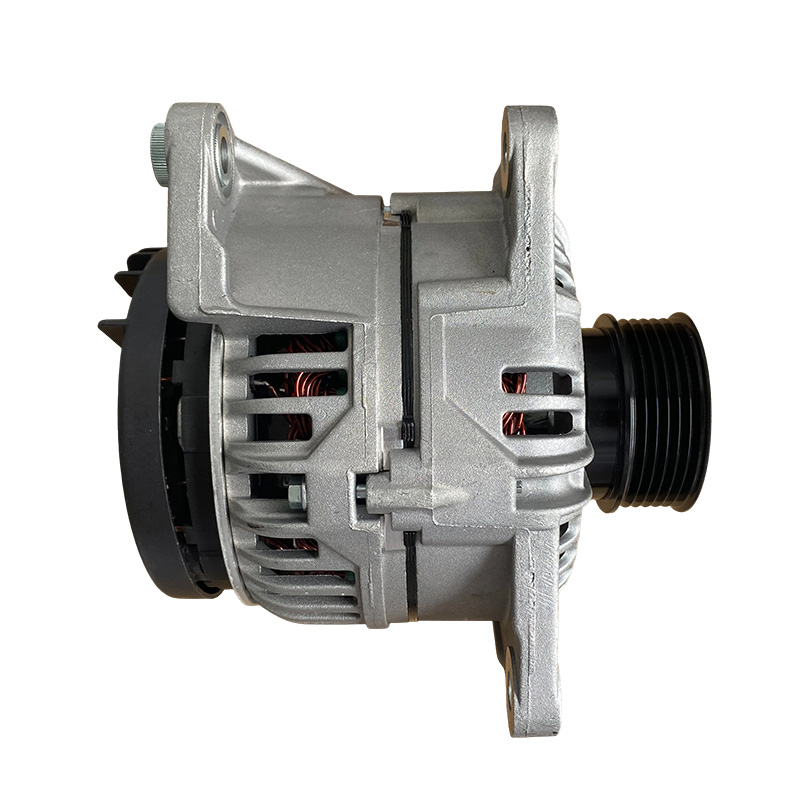
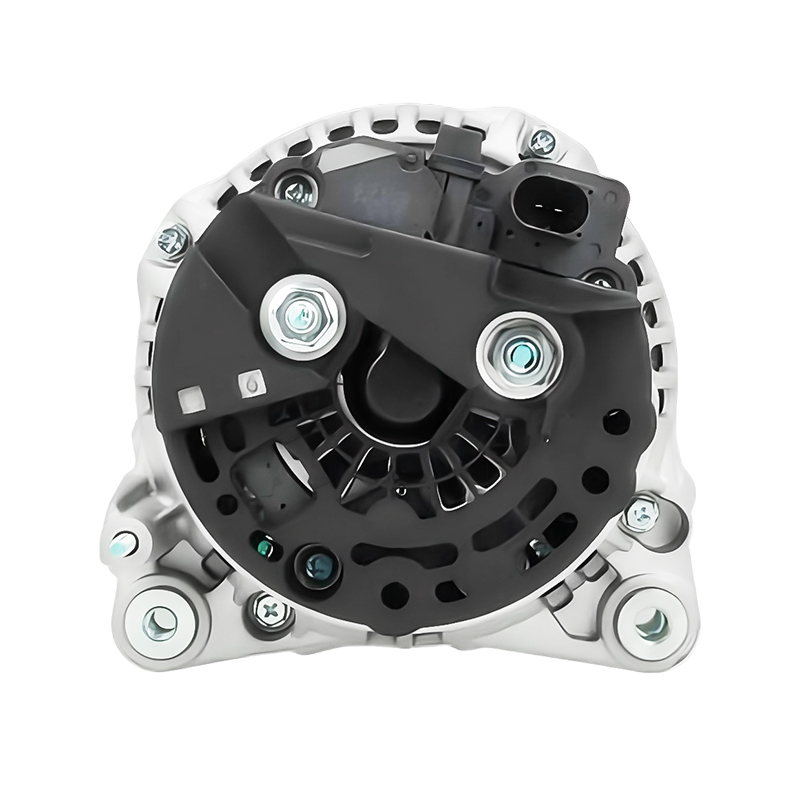 Bosch-Style 12V 140A Alternator for Audi and SeatA 12V 140A Bosch-style unit with 6PK 49.5mm pulley, listed for Audi A1/A3 and several Seat models; useful when matching OEM cross-references.View Product →
Past roughly 150A the curve flattens and application takes over. A cast, sealed housing for a mining machine costs more than a stamped automotive shell in the same output class, because the seals, bearings and vibration spec are different products entirely. Low-volume industrial units therefore carry a price premium that has nothing to do with amperage and everything to do with tooling amortization.
Volume distribution explains why two units of similar size can differ in price by a factor of three. Passenger-car platforms absorb tooling across millions of units; off-highway machines do not.
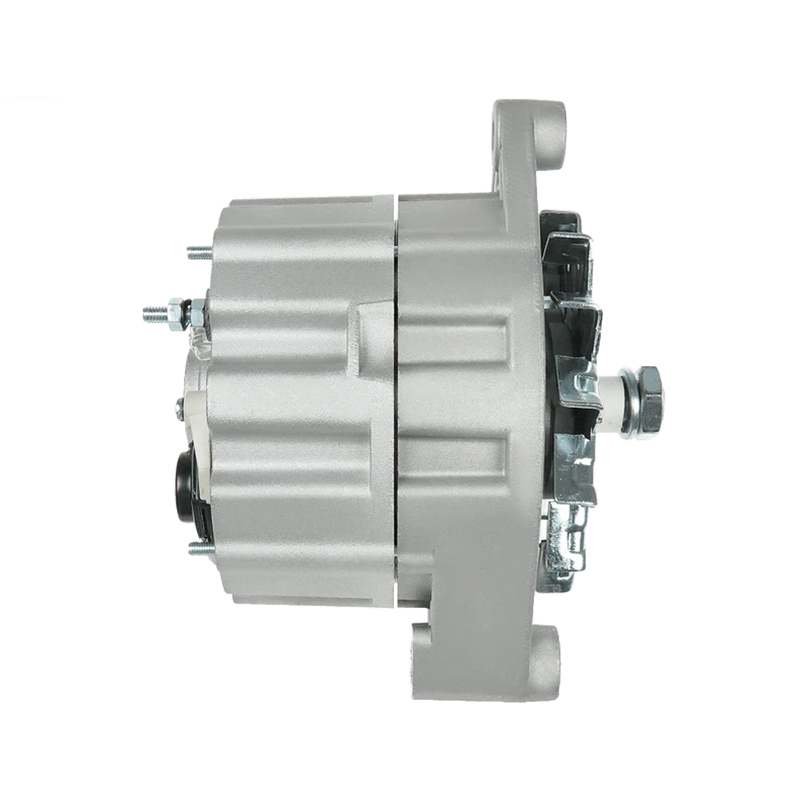
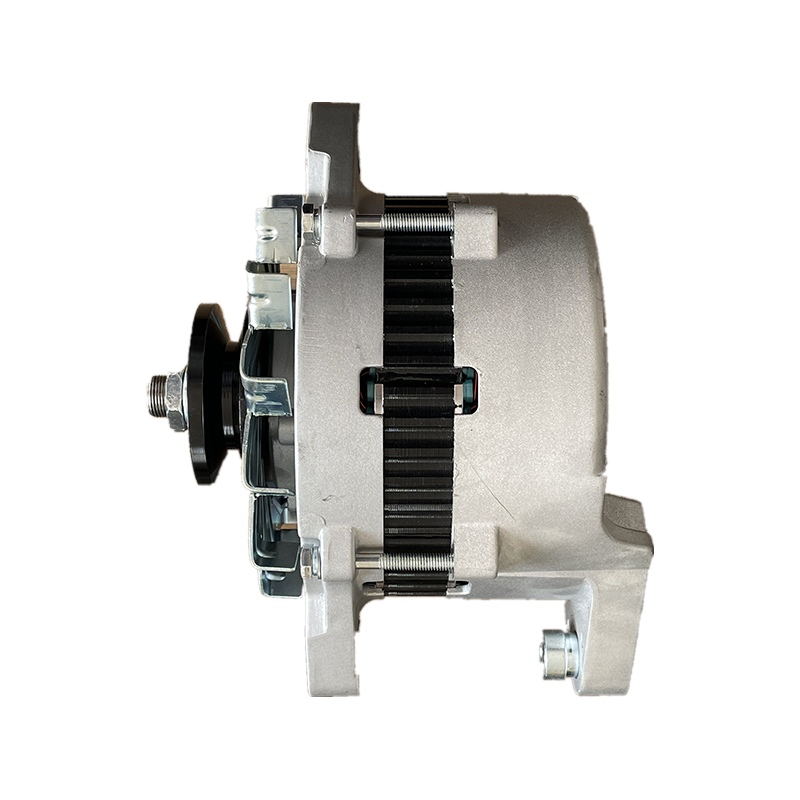 Nikko 24V 90A Alternator for Komatsu HD465 Dump Truck24V 90A single-groove unit with 95mm pulley for Komatsu HD465 rigid dump trucks; relevant where single-rib drive and Komatsu/Nikko cross-references must match.View Product →
The practical consequence: in the top two segments, price competition is fierce and specification discipline is the only differentiator left. In the bottom three, availability and correct cross-referencing outrank price, because a stalled loader or a reefer trailer losing temperature costs far more per hour than the part ever will.
Most alternator cost overruns are fitment failures, not part failures. Working through these six checks before ordering removes nearly all of them; the full specification logic is covered in this alternator buyer's guide for trucks, agriculture and construction equipment.
The purchase price is only the first cost. Heat, dust and belt tension decide how long the second one lasts. On off-highway machines, radiator and hydraulic-oil cooler blockage is the most common cause of premature alternator failure, because the diode bridge runs hotter than its design point long before the bearing fails. Cleaning the cooling stack at every service interval is cheaper than any replacement.
Documentation matters as much as the part. Keep core returns and packaging until the warranty window closes, record the OE numbers and test readings in the machine file, and confirm the supplier's stated delivery and support commitments in writing. A manufacturer that publishes its testing procedures and capacity, such as the production and inspection setup described in this factory capability overview, is easier to hold to a warranty claim than one that only publishes a price list.
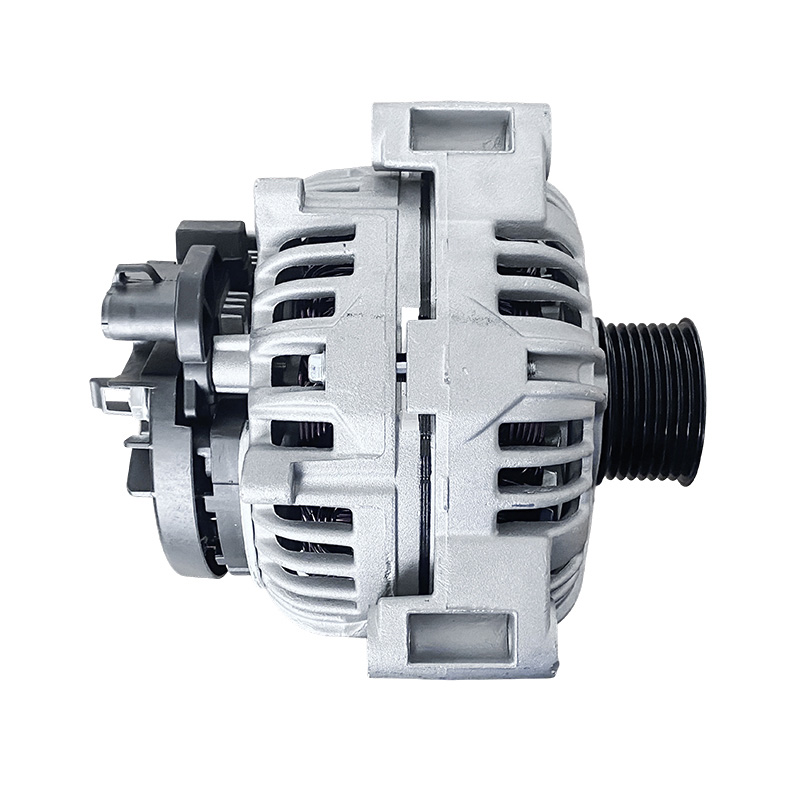
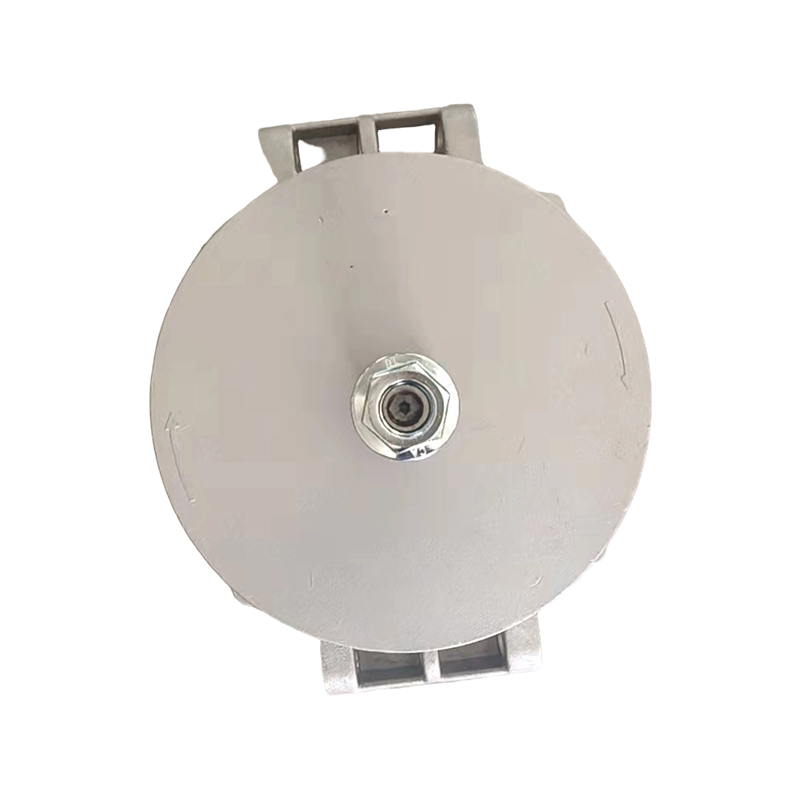 Prestolite 24V 190A Alternator for Commercial and Fire VehiclesHeavy-duty 24V 190A replacement for Leece-Neville 4962-series applications, including fire apparatus and commercial trucks; suited to high-reliability charging needs.View Product →
On specialty fleets, add one more rule: specify the highest-output unit the bracket and belt can carry. Fire, ambulance and refrigerated units spend long periods at idle with heavy electrical loads, and the difference between a 150A and a 190A unit is often one less battery set over the vehicle's life.
Alternator cost is therefore less a number to look up than a number to control. The part is a known quantity: 120 to 350 dollars for most cars, 240 to 900 for heavy-duty and off-highway units. What varies is how well it is matched, how long it takes to reach, and how quickly the machine returns to work. Buyers who treat the OE number, the pulley dimensions and the regulator protocol as fixed requirements, and price as the last variable rather than the first, consistently spend less per operating hour than those who shop the invoice alone.
Recommended Products
For Exclusive Offers And The Latest Deals, Feel Free To Contact Us!
We will unswervingly implement the tenet of "quality first, customer first, strict management, and creating a famous brand". Professional OEM/ODM Automotive Alternator Manufacturers and Heavy-Duty Truck Alternators Suppliers in China.
Product
Contact Info.
+86-180 5150 2183
+86-0510-83880396
No. 11 QiBei Road, Yuqi Town, Wuxi City, Jiangsu Province, China
 OEM Alternator Supplier Custom Automotive Alternator Truck Alternators Supplier
 English
 Español
 عربى