English

Need Help Now? Call Us!
+86-0510-83880396
Our team proudly offers an on-time guarantee and a 100% customer satisfaction guarantee.
Contact Online


 Home / News / Industry News / BMW Part Numbers: How to Decode, Verify, and Cross-Reference Correctly
 2026.11.02
 Industry News
A BMW part number is a lookup key, not a guarantee of fit. The same 11-digit number can sit next to a supersession, an exchange code, or a different pulley and amperage. Check VIN, number, and electrical specs before you order.
A 2008 BMW 328i owner sees “12 31 7 551 423” on a worn alternator, finds a lower-priced unit listed for the same model, and orders it. The replacement arrives with a six-rib pulley instead of the original five-rib pulley. The connector looks close, the voltage is correct, but the belt alignment and charging load are not. That is the practical problem with BMW part numbers: they identify a part family, not every physical detail a counter person needs.
The safer approach is to treat the BMW part number as the start of a three-part check: VIN range, OE number and supersessions, then the electrical and mechanical attributes on the unit itself. That sequence catches most mismatches before they become returns, labor claims, or downtime.
Content
BMW part numbers are usually shown as 11 digits with spaces, such as 12 31 7 551 423. The first two digits identify the main group, the next two narrow the subgroup, and the remaining digits identify the part within that family. Older catalogs and short references may show seven digits, and replacement parts may carry an exchange or remanufactured code. Those variants matter when a counter lookup returns two or three “equivalent” numbers.
The leading digits tell you where BMW files the part, such as engine electrical or charging system. They help a catalog search, but they do not prove that a later production car uses the same housing or pulley.
The trailing digits are the specific reference. Two numbers that differ by one digit can mean a different amperage, pulley groove count, connector clocking, or mounting ear.
A superseded number may replace an older one, but the reverse is not always true. An aftermarket cross-reference should show the chain, not just the latest number.
A VIN lookup is strong for production range, but it is not a substitute for reading the unit. A previous owner may have fitted a different alternator, a remanufactured starter, or a later bracket. The part number confirms the intended assembly; the physical check confirms what is actually bolted to the engine.
Start with the label or laser etching on the housing, then look for a stamped number on the mounting ear or front frame. On alternators, the label often shows the OE number, voltage, amperage, and pulley code. On starters, look for voltage, kW, tooth count, and rotation direction. If the label is gone, measure the pulley diameter and count the ribs before assuming the catalog image is correct.
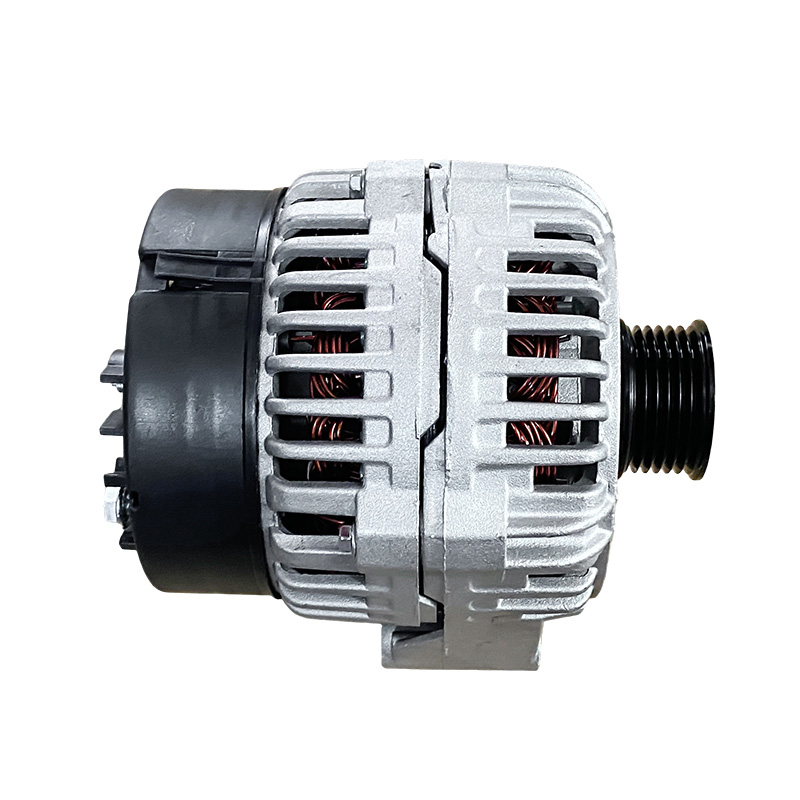
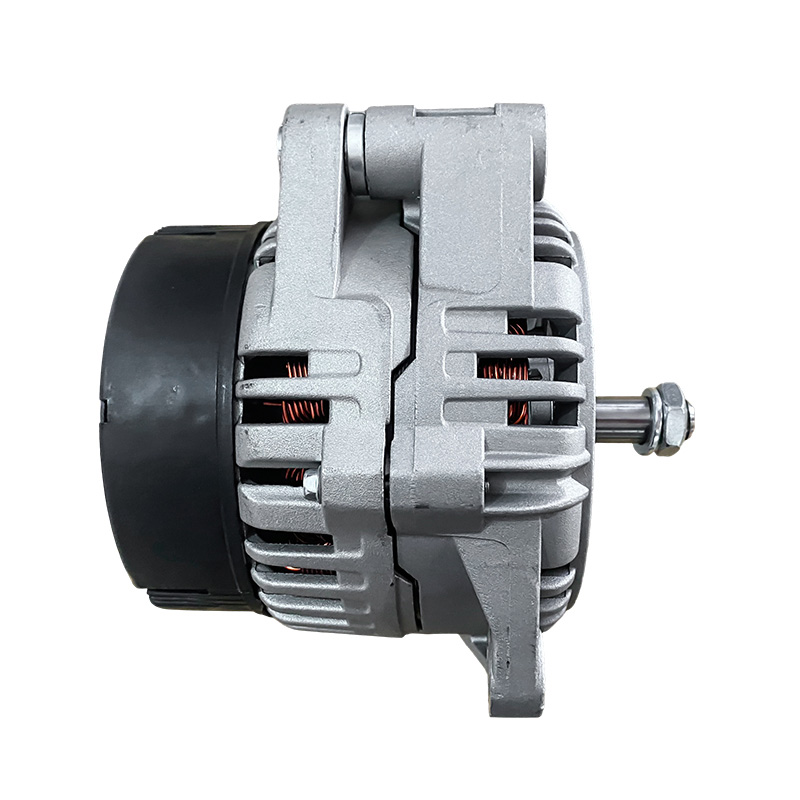
For a BMW E46, E39, or E53 charging-system repair, a 12V 120A 5PK replacement alternator is a common reference point. The five-rib pulley and 120A output are the details to confirm against the original unit, not just the BMW number on the sales listing.
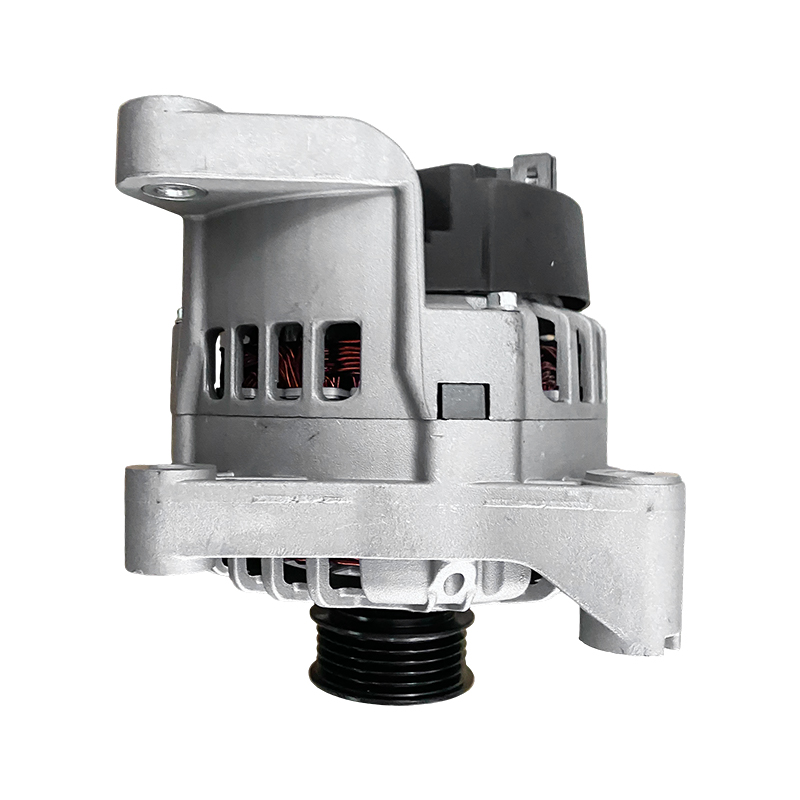 12V 120A 5PK Alternator for BMW E46/E39/E53For E46/E39/E53 charging-system repairs, this alternator offers a 12V 120A output and 5PK pulley; verify pulley and plug against the original.View Product →
A 5PK pulley uses five ribs; a 6PK uses six. They can look similar in a photo, but belt alignment, contact area, and tensioner travel are different. The same caution applies to the electrical plug: a connector that fits may still have a different pin arrangement or regulator signal.
Aftermarket catalogs compress many BMW production variations into a few replacement SKUs. That is useful for coverage, but it raises the value of the physical check. A listing may cover the BMW number, the superseded number, and a remanufactured reference, yet still require the buyer to confirm pulley type, amperage, and mounting.
The hidden cost sits in the last few percent. A 94% match may install, but a wrong pulley offset or low amperage can cause belt noise, repeated battery warnings, or a comeback after the vehicle has left the shop. For a repair business, one avoidable return often costs more than the price difference between a verified part and a cheap listing.
In a typical parts-counter workflow, BMW number inquiries are not evenly spread. Charging and starting parts attract a high share because alternators and starters are wear items with multiple supersessions, pulley variants, and remanufactured references. Body and electronics numbers are often easier to confirm from a VIN, while engine electrical numbers need more cross-checking.
The fastest way to use BMW part numbers is also the least risky: move from the vehicle to the catalog, then back to the part. Keep a photo of the old label and a note of the measured specs in the job file. That record is useful if the replacement is later questioned.
Confirm the model, engine, and production range. Do not use the badge alone when BMW changed charging output within the same generation.
Enter the BMW number and check supersessions. Note every number shown for the same assembly.
For alternators, check voltage, amperage, pulley grooves, diameter, and plug. For starters, check voltage, kW, teeth, and rotation.
Look for a previous replacement, modified bracket, or worn belt. The old unit tells you what the car actually needs.
Save the BMW number, replacement reference, and measured specs. This short record reduces repeat calls and return disputes.
This workflow also improves selection economics. A verified replacement may cost slightly more than an unverified bargain, but it avoids the larger cost of return freight, lift time, and a second repair. For a fleet or repair shop, that trade-off is usually straightforward.
Aftermarket parts should be sold on compatibility, not on a claim of original identity. Keep the BMW part number as a reference field, label the replacement clearly, and retain the cross-reference chain in the product data. That protects the buyer and keeps the listing defensible.
For buyers checking supplier capability, the factory’s manufacturing and testing background matters as much as the cross-reference list. A supplier that can explain how it tests voltage, current, and mechanical fit is easier to audit than one that only publishes a long number list.
BMW part numbers are valuable because they compress a lot of vehicle information into a short reference. They become reliable when the buyer uses them as a route to verification, not as a shortcut around it. Confirm the number, confirm the vehicle, then confirm the part in your hand.
Recommended Products
For Exclusive Offers And The Latest Deals, Feel Free To Contact Us!
We will unswervingly implement the tenet of "quality first, customer first, strict management, and creating a famous brand". Professional OEM/ODM Automotive Alternator Manufacturers and Heavy-Duty Truck Alternators Suppliers in China.
Product
Contact Info.
+86-180 5150 2183
+86-0510-83880396
No. 11 QiBei Road, Yuqi Town, Wuxi City, Jiangsu Province, China
 OEM Alternator Supplier Custom Automotive Alternator Truck Alternators Supplier
 English
 Español
 عربى