English

Need Help Now? Call Us!
+86-0510-83880396
Our team proudly offers an on-time guarantee and a 100% customer satisfaction guarantee.
Contact Online


 Home / News / Industry News / OE vs OEM Alternator & Starter Parts: What Really Differs and Which to Choose
  2026.09.14
 Industry News
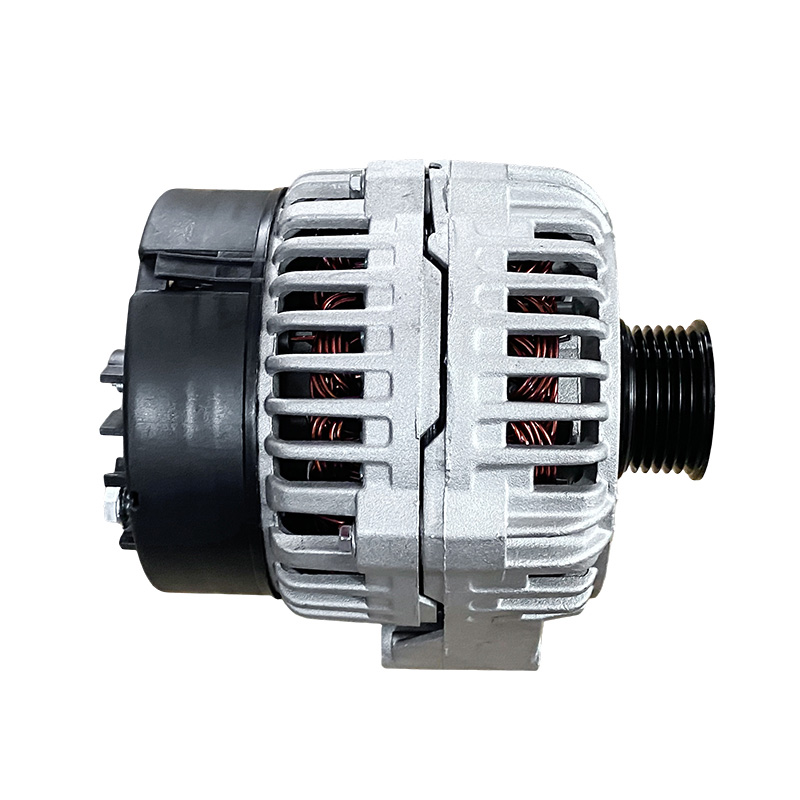
A maintenance buyer orders two alternators carrying the same OE reference, for example Bosch 0120468053. One arrives in a truck-branded box at a 35 percent higher price; the other carries the component maker's label and a lower tag. Both show the same casting marks, the same six-groove pulley, and the same electrical plug. That pair of boxes is the practical difference between OE and OEM.
The short answer: OE and OEM parts are made by the same factory that supplied the vehicle assembly line. The visible differences, such as the box, brand stamp, and paperwork, are usually the only differences. For alternators and starters, choosing OEM over genuine can cut the bill by 25-45% without changing fit or output. What matters most is not which label you buy under, but whether the OE numbers, electrical specs, and physical dimensions match your application.
This distinction matters because parts catalogs list the same Bosch, Denso, Valeo, or Delco Remy unit under several identities. Understanding the labeling chain stops you from paying a large markup for the same component, and it also stops you from buying a cheaper third-party copy that does not meet the original current curve or duty cycle.
Content
The industry uses three overlapping labels, and their meaning shifts slightly depending on whether you sit in the vehicle maker's purchasing office or in a parts catalog. For electrical components such as alternators and starters, the definitions below match how parts actually flow through production.
A parallel category is third-party aftermarket: parts made by factories that never supplied the assembly line. Those can range from acceptable budget options to units with major deviations in voltage regulation or bearing quality. The rest of this article focuses on the choices most buyers actually face: genuine, OE, and OEM.
The comparison below looks at the four sourcing routes for a typical 12V 120A alternator used on a light commercial vehicle. Price is shown as an index with genuine set to 100.
The price index is a typical observation, not a quote. The pattern that matters: genuine and OE share the same physical part in most alternator and starter applications, while a third-party unit can be half the price for a reason.
Three engineering facts explain why OE and OEM alternators and starters are interchangeable with genuine units.
The factory that wins a vehicle program is chosen because its process can hold the regulator set point, the bearing press-fit tolerances, and the diode block specification. Those same tools produce the aftermarket line. A Bosch 0120468053 for a DAF Series 75 uses the same stator winding, rectifier, and voltage regulator whether it ships to a truck plant or to a parts distributor.
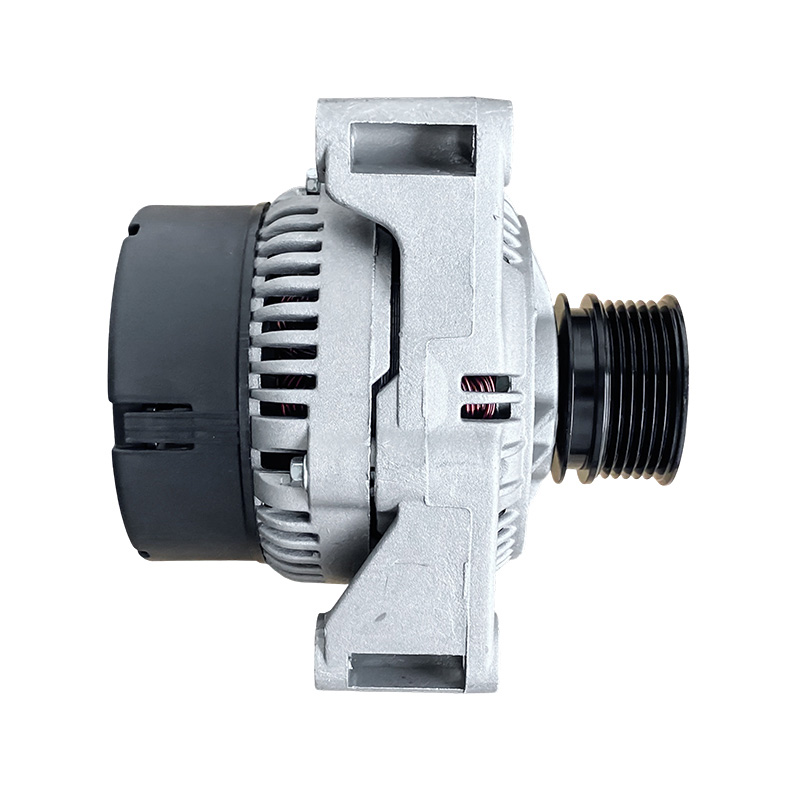
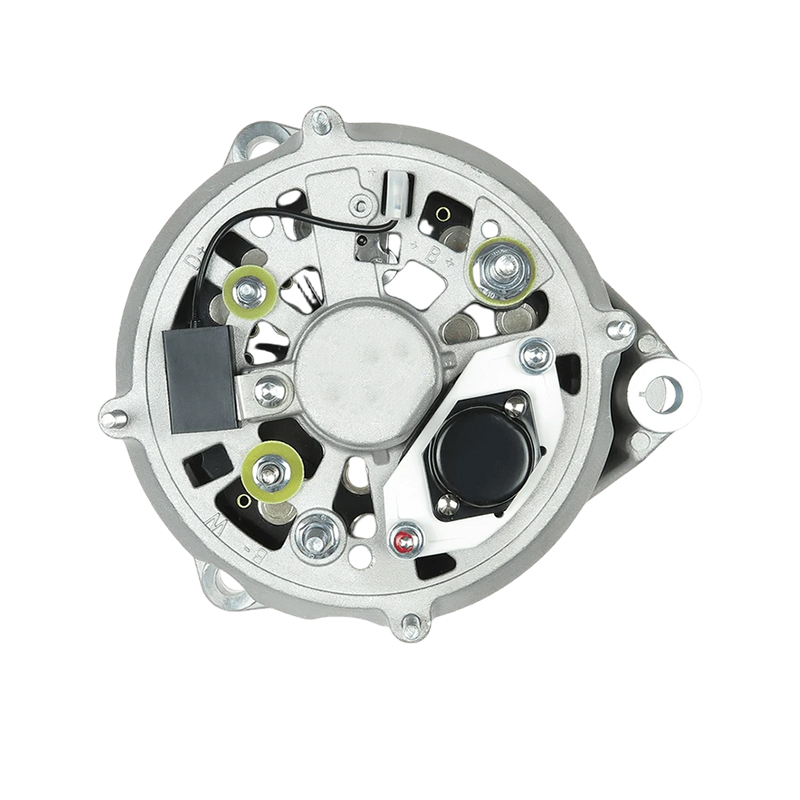 Bosch 24V 80A Alternator for DAF Series 75, CF.85, CF.95, XFThis Bosch-type alternator is built on the same production line as original equipment, so acceptance testing and component specifications remain consistent for aftermarket use. Its 24V 80A output suits DAF truck models covered in the surrounding discussion.View Product →
Alternator production lines test output current at a defined rotor speed and load; the acceptance limits do not change because the part goes into aftermarket packaging. For a 12V 55A unit, the spec is typically a minimum of 55A at about 6,000 alternator rpm with a defined pulley ratio and 13.5V system voltage.
Component makers use warranty-return data to upgrade vulnerable parts. An OEM aftermarket alternator may include a heavier front bearing or a revised brush holder that the vehicle brand did not adopt until its next model year. That is one reason OE/OEM reliability frequently matches or exceeds the genuine box.
Fit and function
Mounting brackets, plug geometry, and pulley dimensions match the vehicle OE. No adapter kits required.
Electrical output
Voltage regulation stays within the rated set point; the current curve follows the original data sheet across the engine speed range.
Traceability
The OE cross-reference numbers printed on the case and in the catalog remain the same, so the replacement is easy to verify before installation.
Beyond the label, four data points tell you whether a quoted part will behave like the original. Experienced buyers verify these before payment.
The chart below illustrates typical reported behavior for the four sourcing routes in alternator and starter replacement, based on warranty-claim observations in the trade. The values are indexes: price relative to genuine, and expected service life relative to genuine.
Legend: dark blue bars show price index; light blue bars show service life index. Treat the numbers as directional, not as a specification. Always confirm the specific unit's declared ratings.
Alternators and starters sourced as OE/OEM appear in every engine-powered machine, but the share differs by segment. The distribution below reflects typical replacement demand observed in parts-export data across passenger, commercial, construction, agriculture, and industrial applications.
Construction and agriculture sit higher than in passenger-only statistics because fleet owners in those segments run OE/OEM units longer and repair rather than replace the machine.
For heavy applications, the Delco Remy starter and Nikko alternator families are common cross-reference points in construction and mining fleets.
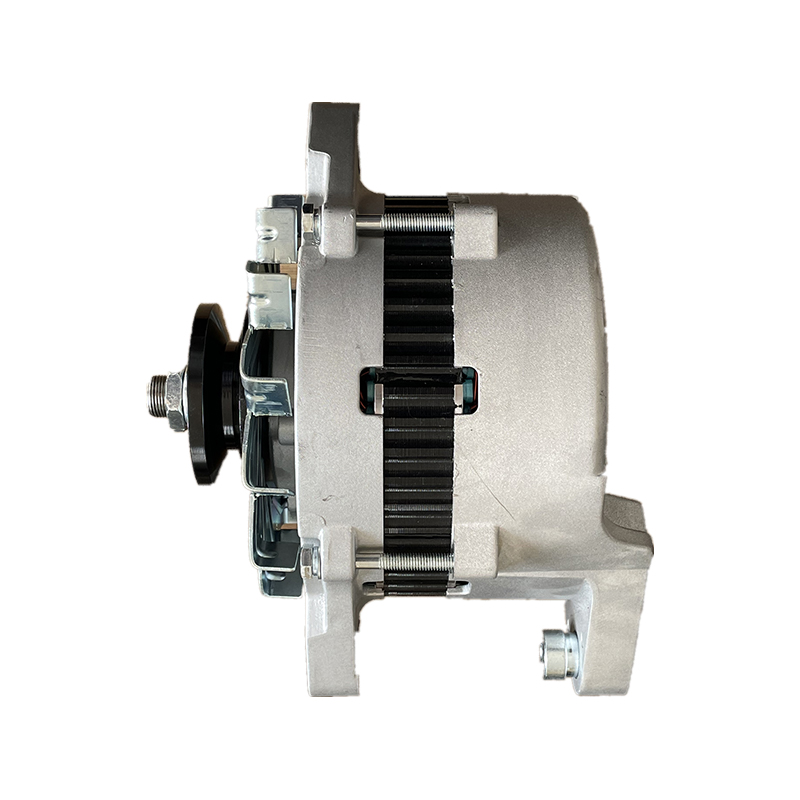 Nikko 24V 90A Alternator for Komatsu HD465 Rigid Dump TruckDesigned for heavy-duty quarry and hauling cycles, this 24V 90A unit uses a single-groove 95mm pulley to manage belt load on Komatsu HD465 trucks. It is a practical cross-reference when comparing total downtime costs in mining fleets.View Product →
The cost question is not just part price. For a commercial truck, one hour of unplanned downtime can outweigh the price gap between a genuine unit and an OEM unit. The comparison that matters is total cost until the next planned maintenance event.
Match every original number for your vehicle. The more overlapping numbers a replacement covers, the more confidence you have that the factory drew from one original design.
For alternators, note voltage, rated current, pulley groove count, and pulley diameter. For starters, add power in kW, tooth count, and rotation direction. If the quoted part lists all these fields, it is a documented unit.
Add part price, installation labor, and probable downtime. A roadside alternator swap on a construction loader can cost more in lost production than the part markup.
Write down the return process and the test conditions for warranty claims. A part sold with clear acceptance criteria is rarely a white-labeled budget unit.
A starter motor follows the same logic. A Delco Remy 42MT, 24V, 8.0kW, CW, 12-tooth unit is a documented OE-format part for heavy diesel engines; confirm the tooth count against the flywheel ring gear before ordering.
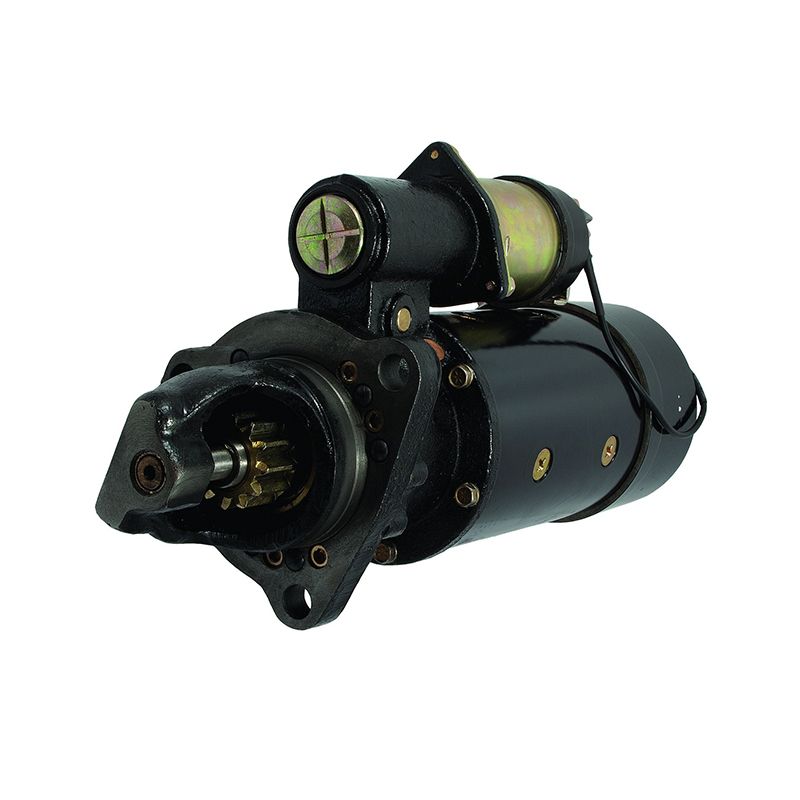 Delco Remy 42MT 24V 8.0kW CW Starter Motor 12TThis heavy-duty starter matches OE format for Cat 3304/3306, Cummins 8.3L, and several truck and industrial applications. Verifying the 12-tooth pinion against the flywheel is essential, as noted in the adjacent heavy-duty selection guidance.View Product →
For a deeper walkthrough of heavy-duty alternator sizing, including how pulley ratio affects charging at idle, see our heavy-duty truck alternator selection guide. And when comparing suppliers, review how our factory verifies OE cross-references before parts leave production.
Even a correctly specified OE/OEM alternator can fail early if installation and storage rules are ignored. These points come from routine factory quality practice.
In compliance terms, OE/OEM parts are recognized in most warranty programs when installed per the vehicle maker's procedure. If a machine is still under new-equipment warranty, confirm with the dealer that using OEM service parts does not affect coverage. Most jurisdictions allow it, but you need documented proof of part origin.
Recommended Products
For Exclusive Offers And The Latest Deals, Feel Free To Contact Us!
We will unswervingly implement the tenet of "quality first, customer first, strict management, and creating a famous brand". Professional OEM/ODM Automotive Alternator Manufacturers and Heavy-Duty Truck Alternators Suppliers in China.
Product
Contact Info.
+86-180 5150 2183
+86-0510-83880396
No. 11 QiBei Road, Yuqi Town, Wuxi City, Jiangsu Province, China
 OEM Alternator Supplier Custom Automotive Alternator Truck Alternators Supplier
 English
 Español
 عربى
عربى