English

Need Help Now? Call Us!
+86-0510-83880396
Our team proudly offers an on-time guarantee and a 100% customer satisfaction guarantee.
Contact Online


 Home / News / Industry News / How to Know If You Have a Bad Starter: 10 Common Symptoms and Easy Tests
  2026.08.18
 Industry News
You turn the key on a cold morning. The dashboard lights come on, the radio works, and the battery reads 12.6 volts. Then you turn the key to start, hear one loud click, and the engine does not crank. If this scenario sounds familiar, the starter is the first part to suspect.
A starter rarely fails without warning. Most failures announce themselves with sound: clicking, grinding, or whirring. If you can identify those sounds and confirm the battery is healthy, you will know with confidence whether the starter is bad.
Bottom line: When the battery is confirmed good and the engine still will not crank, the starter is usually at fault. Use the ten symptoms below, run the voltage and current checks, then order a replacement only after the evidence points back to the starter.
Content
The starter is a short-duty electric motor with a solenoid and a pinion gear. It does one job: rotate the engine fast enough to begin self-ignition. The solenoid performs two tasks at once. It closes the high-current contacts between the battery and the motor, and it pushes the pinion gear into the flywheel ring gear. When you turn the key, this sequence takes about half a second.
Because the starter handles high current and high mechanical force, it wears in predictable ways. These are the three failure paths to keep in mind:
A starter can draw hundreds of amps. High current through brushes, contacts, and windings creates heat that gradually burns and erodes these parts.
Every engine start hammers the pinion against the flywheel ring gear. Over many thousands of cycles, teeth wear and the engagement path becomes loose.
Oil, moisture, and road salt get inside the housing. Mixed with brush dust, they form conductive paths that ruin the armature and field coils.
Once you understand how a starter works, the failure patterns make sense. Watch and listen for these ten signs.
The solenoid reaches the flywheel and closes its contacts, but the motor fails to spin. This points to worn brushes or burned commutator segments.
The solenoid opens and closes repeatedly because voltage collapses when the motor tries to draw current. This is often a battery problem, but a shorted starter can also pull the battery down.
The pinion engages the flywheel too early, too hard, or at a bad angle. Worn pinion teeth and ring-gear damage are the common causes.
The starter motor spins, but the bendix does not push the pinion into the flywheel. The drive assembly is the failure point, not the motor itself.
Headlights stay bright and the horn works, yet the engine is silent. A healthy battery and healthy alternator isolate the fault to the starter circuit.
The car starts fine for days, then fails several times in a row. Heat-sensitive electrical faults inside the starter often behave this way.
A shorted winding or severely worn brushes cause internal overheating. The smell of burning insulation is a red flag that the starter is near the end.
The engine turns over too slowly even after a full charge. Current draw is excessive, and the starter is struggling internally.
An engine oil leak can saturate the starter, contaminating the brushes and causing intermittent electrical connections. Fix the leak before replacing the unit.
A rattle or whine after start-up means the pinion is not retracting cleanly. Left unfixed, it will damage the flywheel ring gear.
The starter, battery, and alternator work as a team, so their failure symptoms overlap. Use this comparison to narrow down which component is actually at fault.
A click without crank is the classic starter complaint, but the click can also come from a battery that cannot hold voltage under load. These tests separate the two.
Measure the battery at rest. A fully charged battery reads about 12.6 volts. While cranking, the voltage should stay above 9.5 to 10.0 volts. If it collapses lower with a confirmed good battery, the starter is drawing excessive current or the battery cannot deliver. Check voltage between the battery terminal and the starter terminal as well; more than 0.5 volts of drop means corroded cables or a loose connection.
A clamp meter on the battery cable shows exactly how much current the starter demands. Typical ranges vary by engine size.
Remove the starter and connect it to a known strong battery on a workbench. Watch the pinion throw and listen to the motor spin. A healthy unit clicks, extends the pinion, spins smoothly, and stops cleanly. This test also helps if you want to keep a starter as a spare after a confusing intermittent fault.
Starter failures are not distributed evenly across vehicle types. Replacement-part data and service patterns show where starters work hardest and fail most often.
Passenger cars dominate simply because there are far more of them on the road. Commercial trucks and construction machines fail less often per unit but impose higher replacement costs because their starters are larger. For example, a failed 24V 50MT heavy-duty starter on an excavator is physically heavy and must be matched to the engine ring gear, the mounting flange, and the rotation direction before installation.
Do not select a starter by vehicle model alone. One engine can have multiple starter options depending on the year, transmission, and original equipment manufacturer. Match the original specification and cross-check the OE reference numbers.
Write down the voltage (12V or 24V), power rating in kW, number of pinion teeth, and rotation direction (CW or CCW). These four values cannot be guessed.
New units cost more but fail less often. Rebuilt units are cheaper and work well when the core was sound, but you trade some long-term reliability for savings.
Buy from a factory that documents its production line and testing procedures. A manufacturer that lists its equipment, capacity, and quality checks on its About page, such as the factory behind the Xiyun brand, is easier to trust for consistent batch quality.
For light commercial and industrial engines, a Delco 37MT 12V 4.0 kW starter motor covers a wide range of applications. Always compare OE numbers and mounting dimensions against the full Delco Remy starter range before you finalize the order.
 Delco Remy Starter Manufacturers, Delco Remy Starter Replacement Suppliers, FactAs Delco Remy Starter Replacement Manufacturers and Supplier, OEM/OEM Delco Remy Starter Factory in China, Sanyou offer Custom Delco Remy...View Product →
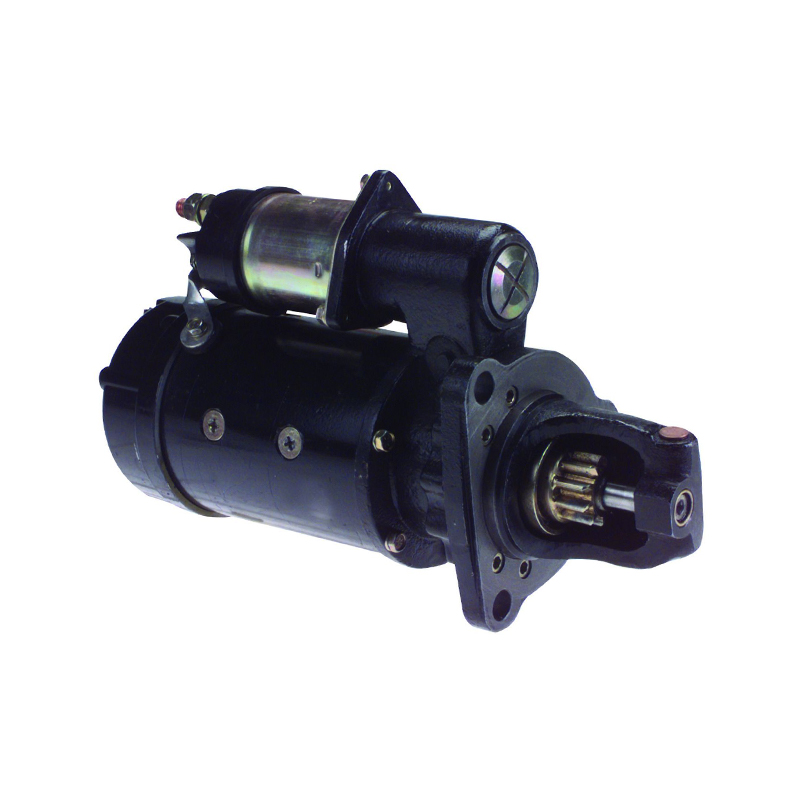 Custom OE DELCO 37MT 12V 10T 4.0KW Starter Motor for Medium and Heavy Duty EnginSanyou Auto -Custom OE DELCO 37MT 12V 10T 4.0KW Starter Motor for Medium and Heavy Duty Engines, Wholesale Online, This DELCO 37MT series...View Product →
Preventing a starter failure is cheaper than replacing one. These habits add years of life for both the starter and the flywheel ring gear.
Starter design is not frozen. Fleet operators and shop owners who follow next-generation starter technologies can plan replacement cycles more accurately, especially as engine start-stop systems and higher compression ratios change the electrical demands on the start circuit.
Recommended Products
For Exclusive Offers And The Latest Deals, Feel Free To Contact Us!
We will unswervingly implement the tenet of "quality first, customer first, strict management, and creating a famous brand". Professional OEM/ODM Automotive Alternator Manufacturers and Heavy-Duty Truck Alternators Suppliers in China.
Product
Contact Info.
+86-180 5150 2183
+86-0510-83880396
No. 11 QiBei Road, Yuqi Town, Wuxi City, Jiangsu Province, China
 OEM Alternator Supplier Custom Automotive Alternator Truck Alternators Supplier
 English
 Español
 عربى
عربى