English

Need Help Now? Call Us!
+86-0510-83880396
Our team proudly offers an on-time guarantee and a 100% customer satisfaction guarantee.
Contact Online


 Home / News / Industry News / Alternators for Trucks, Agriculture & Construction: Full Specification
  2026.03.26
 Industry News
Content
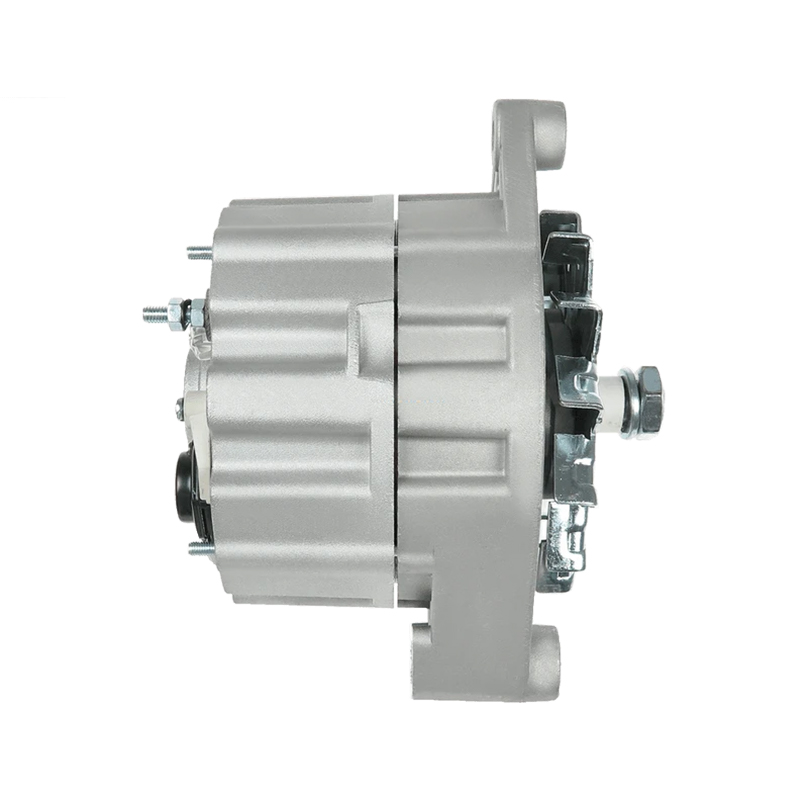
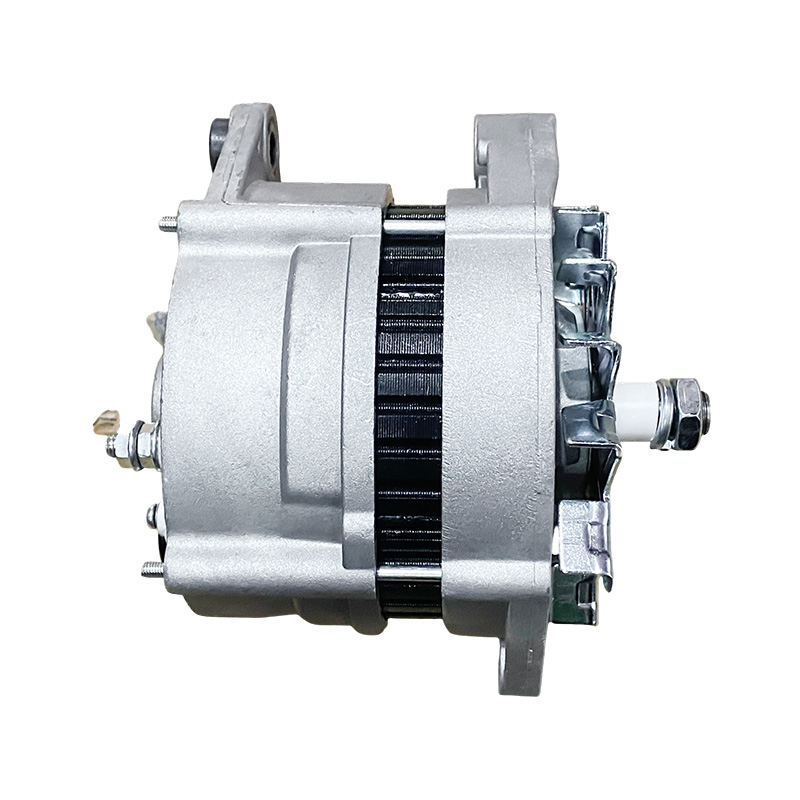
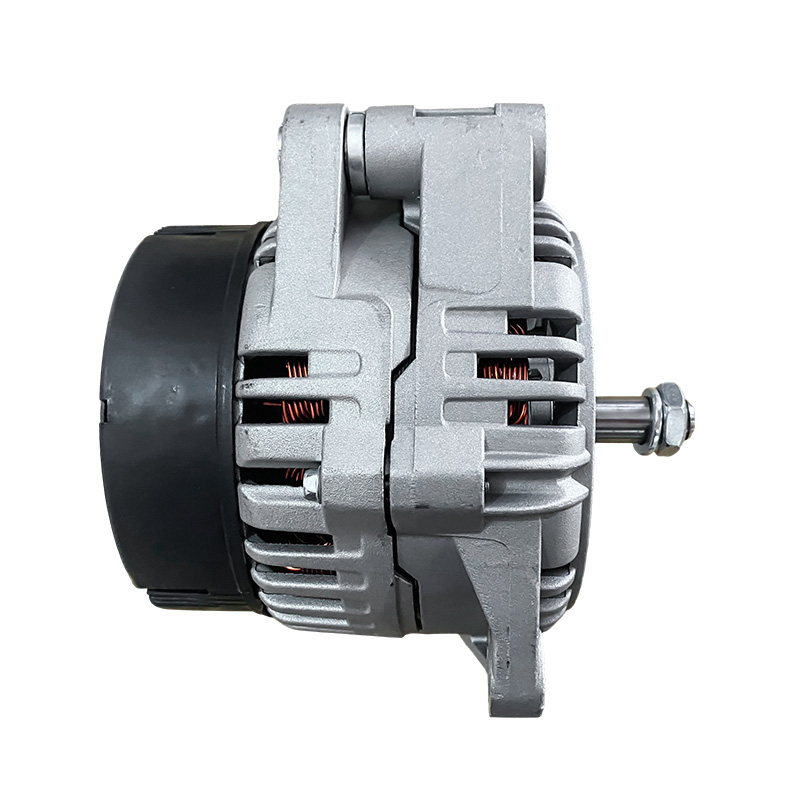
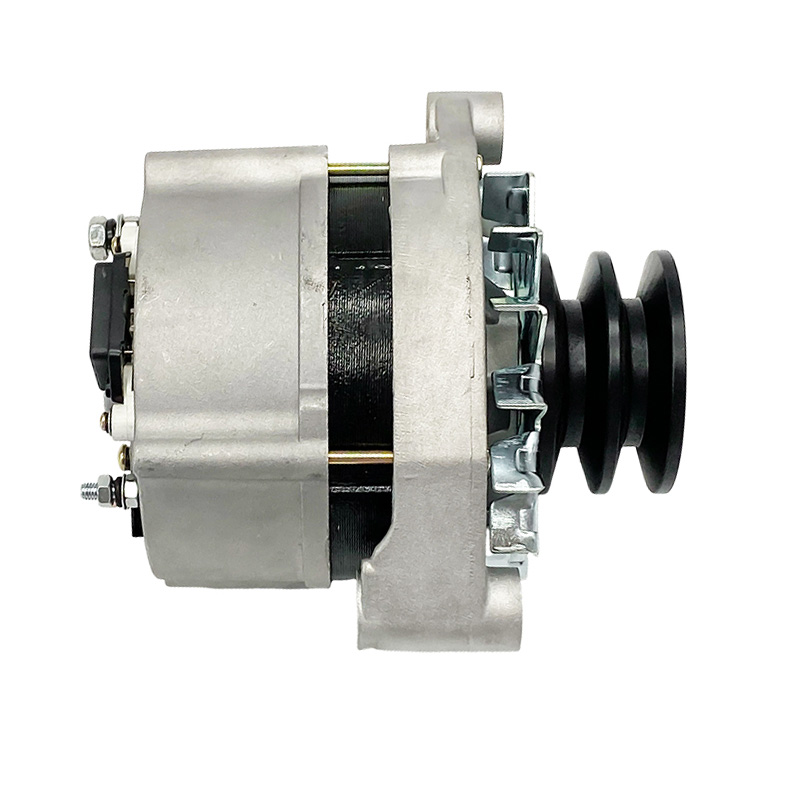
Every internal combustion engine platform — from a passenger car to a 400-horsepower combine harvester to a mining-class excavator — depends on an alternator to keep its electrical system operational. The alternator converts mechanical energy drawn from the engine's crankshaft into alternating current, which an internal rectifier immediately converts to direct current to recharge the battery and supply all active electrical loads while the engine runs.
The core architecture — rotor, stator, rectifier, and voltage regulator — is consistent across all these platforms. What changes is the specification envelope: output amperage, duty cycle tolerance, vibration resistance, environmental sealing, and thermal management requirements all scale dramatically from a standard automotive alternator to a unit designed for continuous operation on a construction machine or agricultural harvester.
Understanding these differences is essential for procurement, fleet maintenance, and sourcing decisions. Selecting a unit matched only to physical fitment — rather than to the full application specification — is the most reliable path to premature failure and avoidable downtime.
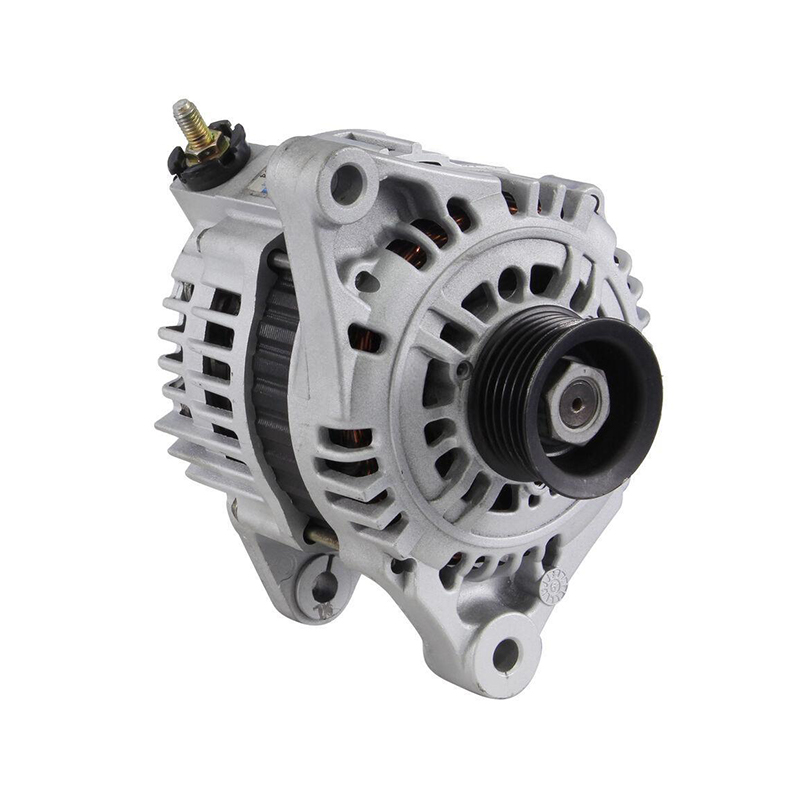
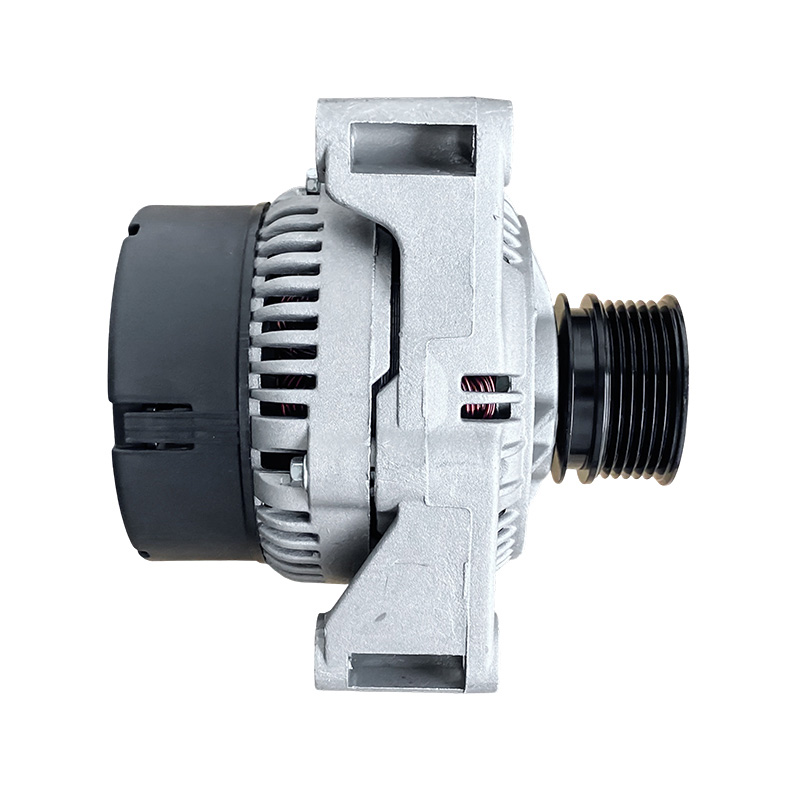
Automotive alternators fitted to passenger cars, light trucks, and SUVs represent the most widely produced alternator category globally. Rated output typically falls between 80 and 160 amps, and the design philosophy prioritizes compactness, weight, and cost efficiency over the sustained high-load performance required in commercial applications.
In normal passenger vehicle use, an automotive alternator operates at 25–50% of its rated output for most of its service life. Peak demand occurs during cold starts with climate control, heated seats, and high-beam lighting active simultaneously — but these high-load events are brief. This intermittent duty profile allows automotive alternators to use lighter-gauge windings and simpler cooling arrangements that would be inadequate in continuous-duty commercial contexts.
Modern automotive alternators increasingly incorporate smart voltage regulation — communicating with the engine ECU to reduce alternator load during acceleration and increase charging during deceleration and braking. This efficiency optimization improves fuel economy by an estimated 1–3% in real-world driving cycles, a meaningful figure at scale for fleet operators running light commercial vehicles.
Common failure modes in automotive alternators follow a predictable hierarchy: bearing wear presents first as RPM-dependent whining, followed by brush and slip ring degradation causing intermittent output loss, and finally diode pack failure introducing AC ripple into the vehicle's DC system — which can corrupt ECU memory and damage sensitive electronics if undetected.
Class 6 through Class 8 commercial trucks — semi-tractors, vocational dump trucks, tankers, refuse vehicles, and fire apparatus — operate electrical systems that bear no meaningful resemblance to passenger vehicle demands. A fully loaded long-haul tractor may simultaneously power refrigerated trailer connections, cab inverters supplying 1,000+ watts of appliances, electronic logging systems, multiple HVAC zones, and full exterior lighting arrays. Aggregate loads routinely exceed 200–250 amps in continuous operation.
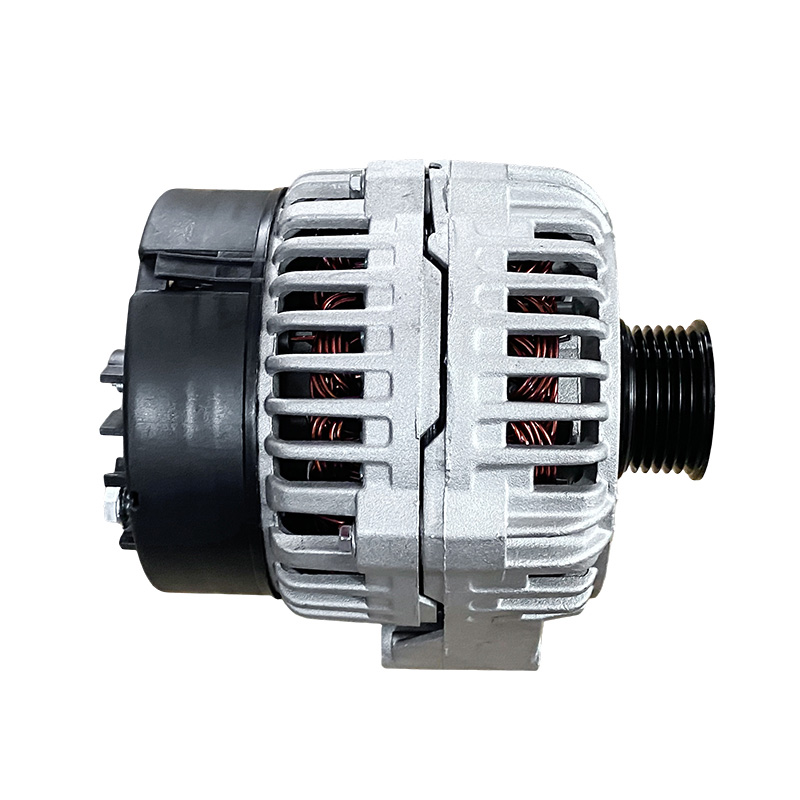
Heavy-duty truck alternators address this through substantially uprated output capacity — typically 160 to 320 amps for standard commercial applications, with specialized units for emergency vehicles and airport ground support equipment reaching 400 amps or beyond. Beyond raw output, three characteristics define quality in this category:
Fleet maintenance programs consistently show that specifying a truck alternator rated 20–30% above calculated peak electrical load — rather than matching rated output to peak demand exactly — extends service intervals significantly by reducing sustained thermal stress on windings and rectifier assemblies.
Modern agricultural machinery carries a level of electronic sophistication that would have been unrecognizable a generation ago. Current-model high-horsepower tractors and combines integrate GPS auto-steering, variable-rate application controllers, yield mapping systems, telematics platforms, and extensive work lighting — all operating simultaneously during peak field operations. Electrical loads on a large combine harvester during active cutting can exceed 200 amps, sustained across harvest shifts that may run 16–18 hours per day.
Agricultural alternators must address two environmental challenges that are largely absent in on-road truck applications:
Combine harvesters and grain carts operate in dense clouds of crop dust, chaff, and plant material throughout harvest. Open-frame alternator designs that rely on through-flow air cooling — standard in automotive and many truck applications — ingest this material directly into stator windings and bearing housings, accelerating failure dramatically. Agricultural-grade alternators use sealed or internally recirculating cooling designs that maintain thermal performance without drawing contaminated external air across internal components.
Planting season operations in early spring can expose equipment to ambient temperatures well below freezing, while late-summer harvest in major grain-producing regions regularly reaches 35–40°C ambient at the alternator mounting location — higher still in enclosed engine compartments. Agricultural alternators specified for operation across −40°C to +85°C ambient ranges maintain consistent voltage regulation and avoid insulation degradation across this span.
A third factor unique to agricultural applications is the compression of operating hours into short seasonal windows. A combine may accumulate a full year's equivalent operating hours in 4–6 weeks of harvest. This makes pre-season alternator inspection and proactive replacement of marginal units a higher-value maintenance action than in applications where wear accumulates gradually across twelve months — a mid-harvest alternator failure at a remote field location carries significant economic cost beyond the part itself.
Construction equipment alternators — serving excavators, wheel loaders, motor graders, bulldozers, compactors, and crawler cranes — operate under the most severe mechanical stress of any alternator category. Raw output demand is often moderate by heavy-truck standards, typically 90 to 200 amps for mid-range construction equipment, but the mechanical environment is uniquely destructive.
Continuous high-amplitude vibration, transmitted through the machine frame from bucket impacts, compaction loads, rough terrain travel, and percussion tool operation, is the dominant failure driver. Standard alternator internal assemblies — designed for the comparatively mild vibration environment of an on-road vehicle — exhibit accelerated failure in this environment through several mechanisms:
Construction-grade alternators address these failure modes through reinforced internal construction: heavier-gauge stator windings with upgraded insulation class, potted or epoxy-encapsulated rectifier bridges that eliminate solder joint vulnerability, oversized bearing assemblies with higher dynamic load ratings, and multi-point mounting provisions with anti-vibration isolators. IP44 or IP54 ingress protection ratings are standard in purpose-built construction alternators, providing resistance to water splash, mud, and the fine silica dust prevalent on earthmoving sites.
When sourcing replacement alternators for construction equipment, mechanical durability specification is the primary evaluation criterion — not output amperage. An aftermarket unit that fits physically and meets output requirements but uses automotive-grade internal construction will fail significantly earlier than a properly specified construction-grade replacement.
| Application | Typical Output | Duty Cycle | Primary Stress | Key Design Priority |
|---|---|---|---|---|
| Automotive | 80 – 160 A | Intermittent (25–50%) | Brief peak loads | Compact size, cost efficiency |
| Heavy-Duty Truck | 160 – 400 A | Continuous (100%) | High sustained load | Output capacity, cold amperage |
| Agricultural Equipment | 120 – 250 A | High seasonal intensity | Dust, chaff, temp extremes | Sealed design, thermal range |
| Construction Machinery | 90 – 200 A | Continuous | Mechanical vibration | Vibration resistance, IP rating |
Regardless of application category, a rigorous alternator selection process should confirm the following before finalizing any purchase:
Applying this checklist consistently — rather than relying solely on part number cross-reference — reduces premature alternator failure across all application categories and is particularly high-value in agricultural and construction contexts where the cost of unplanned downtime substantially exceeds the cost of the alternator itself.
Recommended Products
For Exclusive Offers And The Latest Deals, Feel Free To Contact Us!
We will unswervingly implement the tenet of "quality first, customer first, strict management, and creating a famous brand". Professional OEM/ODM Automotive Alternator Manufacturers and Heavy-Duty Truck Alternators Suppliers in China.
Product
Contact Info.
+86-180 5150 2183
+86-0510-83880396
No. 11 QiBei Road, Yuqi Town, Wuxi City, Jiangsu Province, China
 OEM Alternator Supplier Custom Automotive Alternator Truck Alternators Supplier
 English
 Español
 عربى
عربى