English

Need Help Now? Call Us!
+86-0510-83880396
Our team proudly offers an on-time guarantee and a 100% customer satisfaction guarantee.
Contact Online


 Home / News / Industry News / 2004 Mercedes-Benz SL55 AMG: Charging, Starting & Electrical Wear Guide
  2026.09.28
 Industry News
A 2004 Mercedes-Benz SL55 AMG that turns over slowly after a week of sitting, then starts cleanly off a jump pack, is usually showing the first stage of a charging problem rather than a starter failure. The R230 roadster pairs a 493 hp supercharged V8 with an active body control hydraulic pump, an electro-hydraulic braking unit and a long list of comfort electronics, all of which keep working at idle. That is exactly the condition under which a tired alternator stops keeping up.
So take the conclusion first: confirm battery health and charging voltage before ordering anything, then match voltage, current rating, pulley groove count, pulley diameter and regulator set point against the original OE number. A 12 V alternator that bolts on but sits 30 A below specification will survive a short test drive and still leave you with a flat battery on the first cold morning.
Content
Diagnose before you replace. Split the symptoms: slow cranking points at battery and charging; a single loud click or silence with full voltage points at the starter motor, solenoid or ground strap.
Match four figures, not one. Voltage, rated current, pulley groove count and pulley diameter all have to line up, plus the regulator's voltage set point.
Budget the labour honestly. A straightforward alternator swap on this car runs roughly 2 to 4 hours of shop time once the accessory drive and intake plumbing are moved out of the way.
Owners who buy an SL55 cheaply, sometimes under $10,000 at auction, are often buying a car whose electrical and hydraulic maintenance was deferred. That history matters more than the mileage on the odometer.
Alternator sizing is not driven by engine output, it is driven by accessory demand. On this platform the demand arrives in short, high-current bursts rather than as a steady drain, which means the unit has to recover quickly at low engine speed.
A pump that runs for three seconds and stops asks more of the alternator than a constant 10 A drain, because the battery has to supply the peak and then be recharged.
Output curves fall steeply below 2,000 rpm. A unit already 20 A down on specification can be marginally adequate on the highway and inadequate in city traffic.
Regulators and diode packs are the first components to drift. That is why a failing unit often presents as chronic undercharging rather than a warning lamp.
Most R230 SL55 AMG builds left the factory with a 12 V alternator in the 120 to 150 A class. Use the table below as a checklist, and always confirm the final numbers against your own OE number rather than a generic listing.
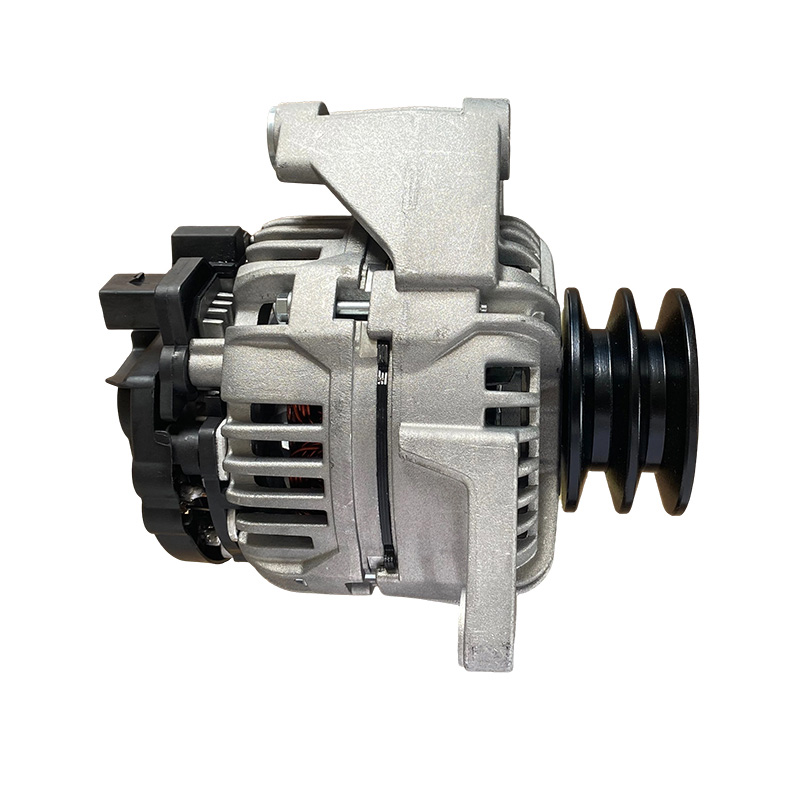
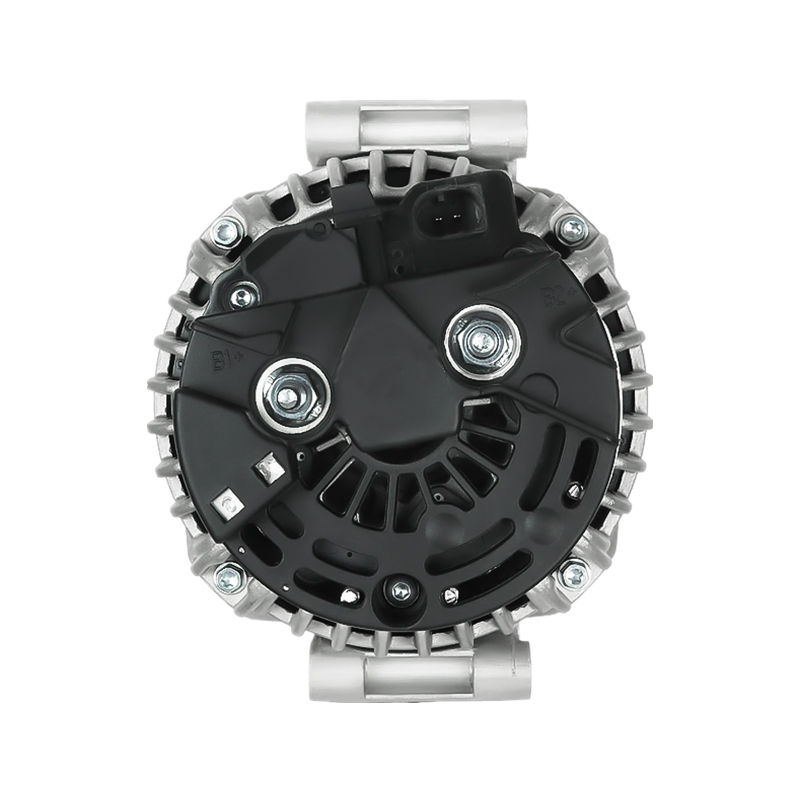 A013154100280, A013154100288 12V 200A 6PK49 Bosch Car Alternator for MERCEDES-BENZ Series 0124625006, 0124625204, 0986046320, 1986A00949, F032CA1846, CA1846IR, 1-3462-25W, 0121547902, 0131541002, 013154100280, A0121547902, A0131541002, A013154100280, A01315...View Product →
For cars running extra audio, auxiliary lighting or frequent short trips, a higher-output 12 V unit in the 200 A class is a practical route, provided the belt, tensioner and charge cable are in good condition. A mid-range 12 V replacement is usually enough for a standard car that is driven regularly.
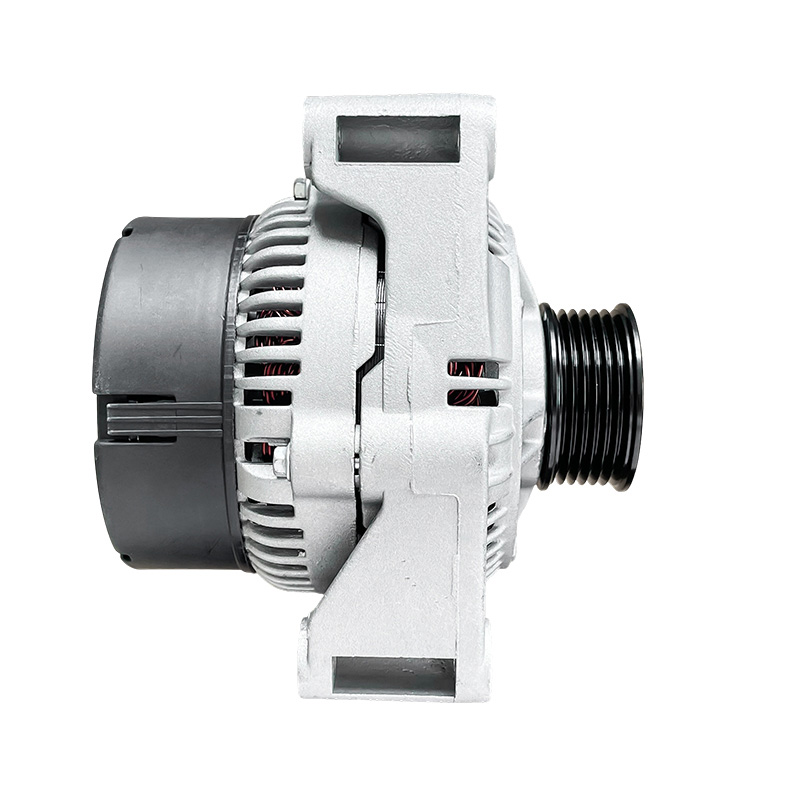
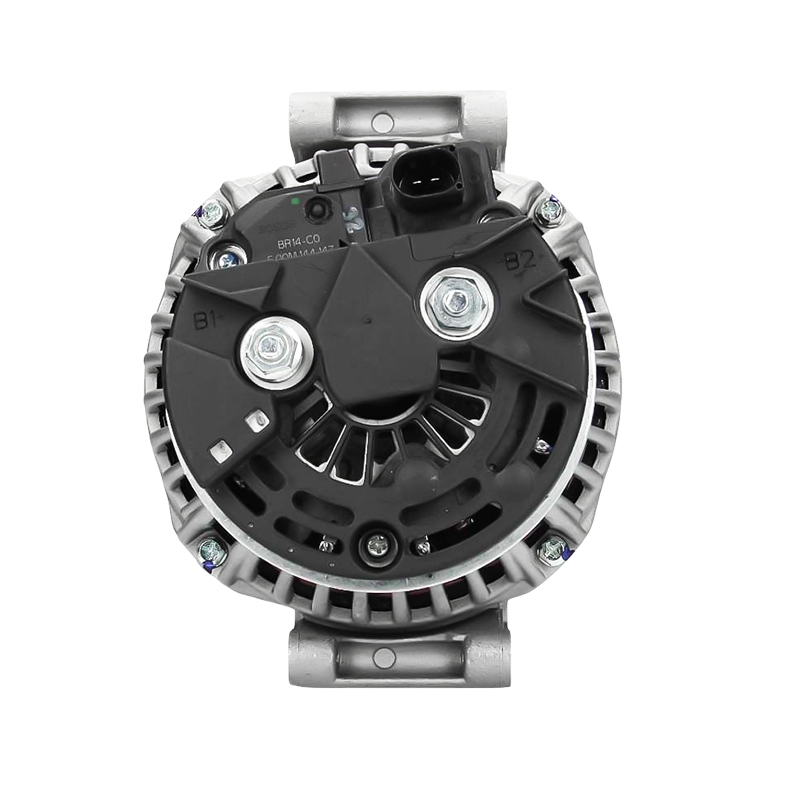 A271154080280, A2711540902 12V 120A 7PK56 Bosch Car Alternator for MERCEDES-BENZ Series 200124515088, 0124515198, 0986045380, CA1752IR, 1-3190-01VA, 13954N, 2711540202, 2711540802, 2711540902, A2711540202, A2711540802, A271154080280, A2711540902 12V 120A 7P...View Product →
The chart below shows approximate peak currents for the main consumers on an R230 SL55, based on typical workshop measurements. Treat them as planning figures, not as published specifications.
Add the peaks together and the total briefly exceeds what a healthy 120 A unit can hold at idle. In practice the battery covers the overlap, which is why battery condition and charging voltage have to be judged together rather than in isolation.
Broken down by function, the distribution of electrical demand on this platform is noticeably different from a conventional sedan. Hydraulics and thermal management dominate.
The lesson for parts selection is direct: on a 20-year-old car with this load profile, an alternator is not a consumable you buy on price alone. A unit that is correct on paper but built with a low-grade regulator will fail in the same way the original did.
If the car instead produces a single heavy click with full battery voltage, the fault is on the starting side. Modern gear-reduction starter motor designs have changed how engagement and current draw behave, and the same diagnostic order applies: battery, cables and grounds first, then the motor.
Long-term reliability on a car like this comes down to documentation and inspection discipline rather than luck.
When sourcing replacements, it helps to know whether the supplier actually manufactures and tests the units rather than trading them. Reviewing a supplier's alternator and starter production background — equipment, test benches and stated capacity — tells you more than a catalogue photograph does.
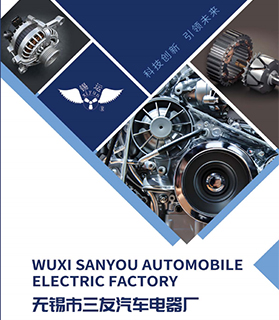 Mercedes-Benz Alternator ManufacturerOur factory specializes in producing starters, generators, and spare parts for automobiles, tractors, and internal combustion engines. We possess advanced production a...View Product →
A sensible purchasing rule for a 20-year-old SL55: buy against the OE number and the electrical specification, confirm the pulley dimensions in writing, and treat the warranty terms and delivery schedule as part of the product.
Treat the charging system on a 2004 SL55 AMG as a matched set rather than a single part. Measure before you buy, match every dimension and rating that affects how the unit is driven, and verify the result under load afterwards. Doing that keeps a 493 hp roadster starting cleanly in winter and spares you the cycle of replacing the same component twice.
Recommended Products
For Exclusive Offers And The Latest Deals, Feel Free To Contact Us!
We will unswervingly implement the tenet of "quality first, customer first, strict management, and creating a famous brand". Professional OEM/ODM Automotive Alternator Manufacturers and Heavy-Duty Truck Alternators Suppliers in China.
Product
Contact Info.
+86-180 5150 2183
+86-0510-83880396
No. 11 QiBei Road, Yuqi Town, Wuxi City, Jiangsu Province, China
 OEM Alternator Supplier Custom Automotive Alternator Truck Alternators Supplier
 English
 Español
 عربى
عربى