English

Need Help Now? Call Us!
+86-0510-83880396
Our team proudly offers an on-time guarantee and a 100% customer satisfaction guarantee.
Contact Online


 Home / News / Industry News / Valeo Alternator Replacement: OE Standards, Key Specs & Vehicle Applications
  2026.06.08
 Industry News
Content
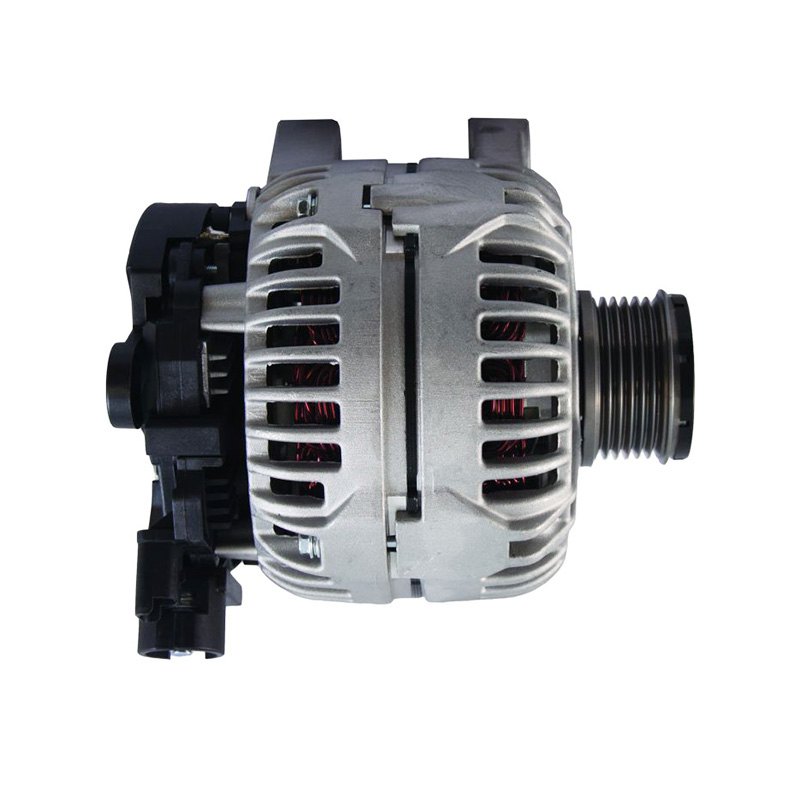
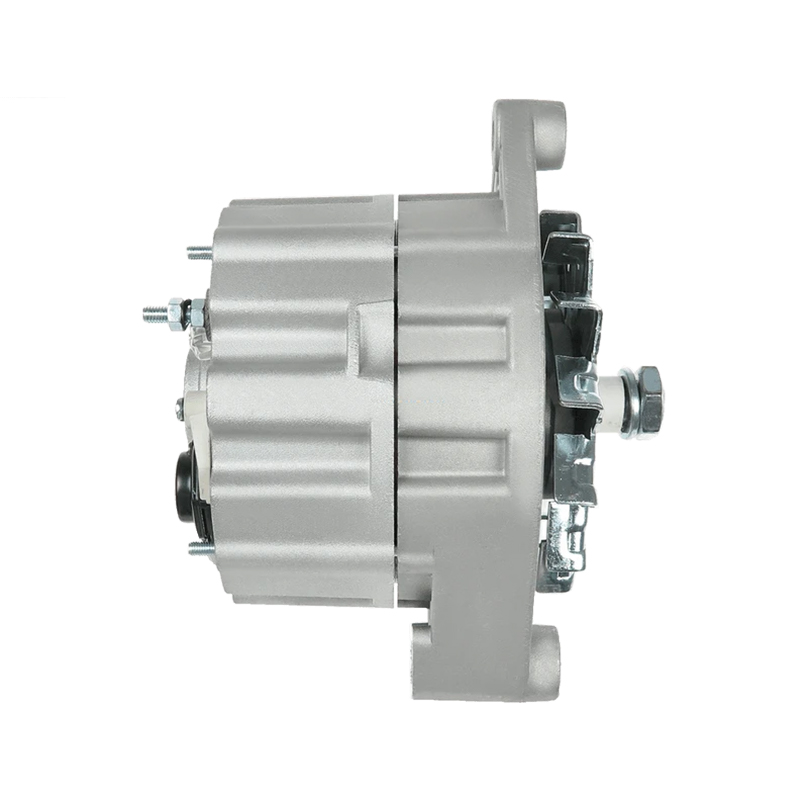
Valeo has been supplying electrical systems to vehicle manufacturers since 1923. That longevity isn't a marketing footnote — it reflects the fact that automakers across Europe and beyond have continued selecting Valeo alternators as original equipment across generations of platforms. BMW, Renault, Mercedes-Benz, Hyundai, Audi, Volkswagen, and Ford have all shipped vehicles from the factory with Valeo alternator replacement units for passenger and commercial vehicles already installed.
The design philosophy behind Valeo alternators has remained consistent: compact casing to fit tight engine bays, an efficient heat-dissipation layout that maintains output under load, and a built-in voltage regulator tuned to work with European engine management systems. These aren't generic specifications — they reflect the particular demands of frequent start-stop traffic cycles, varied ambient temperatures, and the growing electrical load from modern onboard electronics.
For workshops and fleet operators, this means one practical reality: when a Valeo unit fails, the replacement needs to match not just the amperage and voltage, but the physical mounting, the pulley configuration, and the regulator behavior that the vehicle's ECU expects. A mismatch on any of these points creates problems downstream, from unstable charging to battery drain warnings and fault codes.
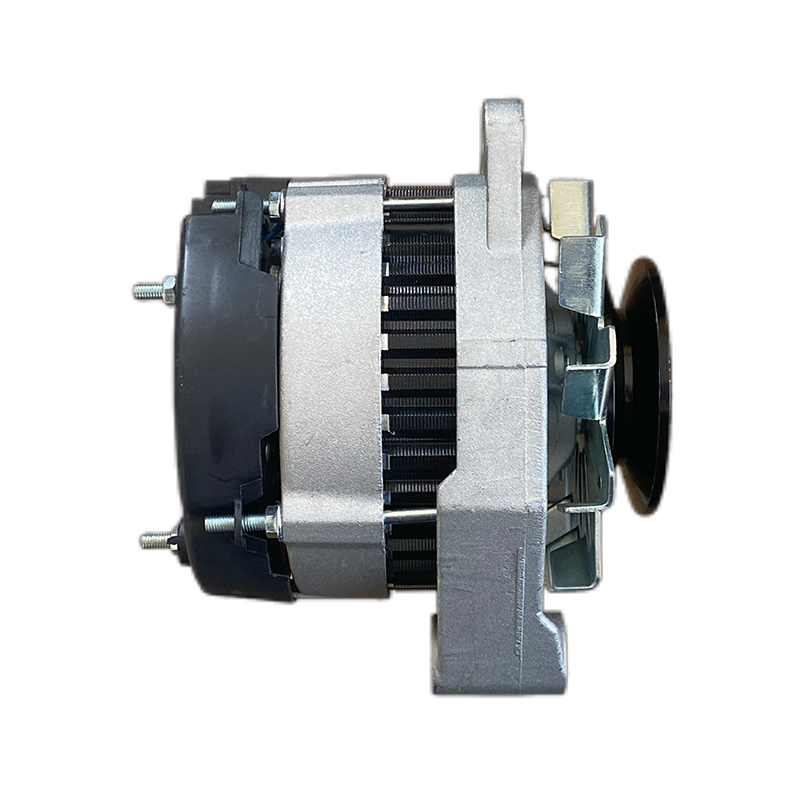
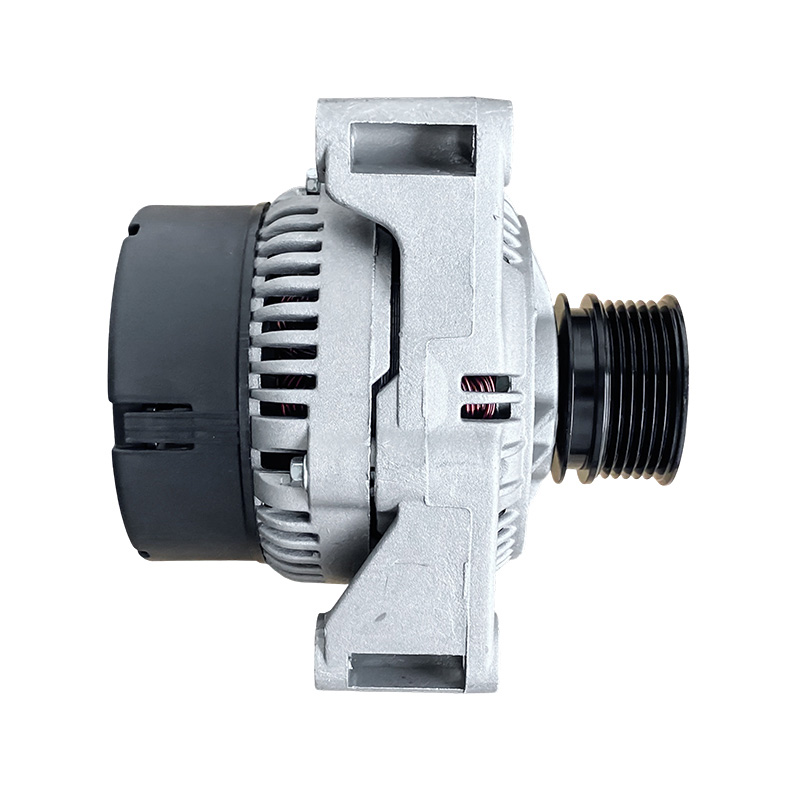
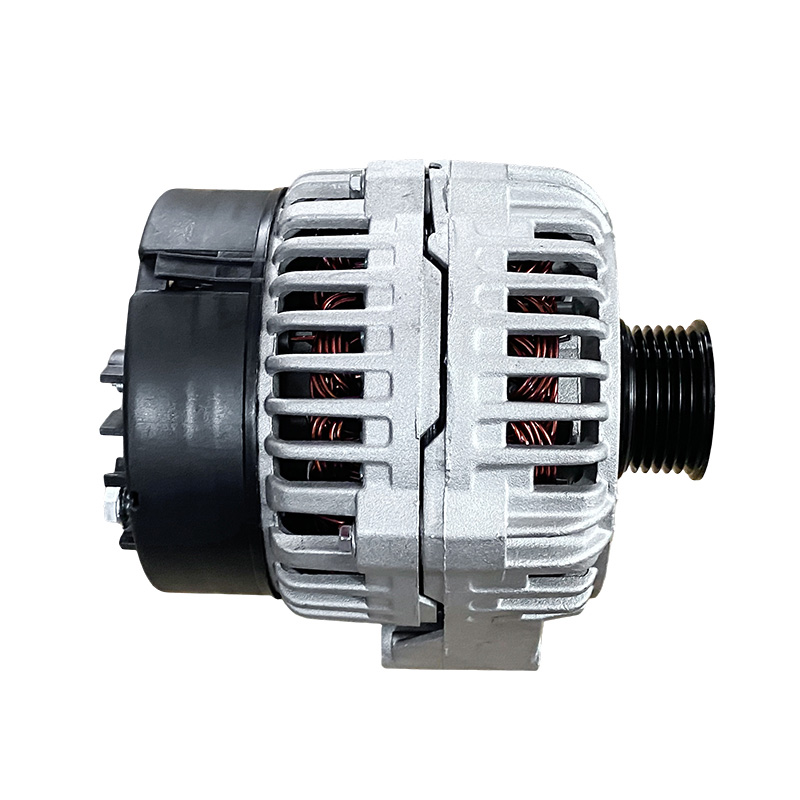
The aftermarket for alternators splits broadly into two categories: rebuilt units and new replacements. Rebuilt alternators — sometimes called remanufactured — take a used core and replace selected worn components such as brushes, bearings, or the voltage regulator. The housing, rotor, and stator from the original unit are retained.
A new OE-spec replacement, by contrast, is built entirely from new components following the same structural standards as the original. Every internal part — rotor windings, stator, rectifier, regulator, bearings — starts fresh. There is no wear history, no thermal fatigue carried over from a previous service life, and no uncertainty about which internal components were actually replaced during rebuilding.
For Valeo alternator replacements specifically, the OE structural approach matters because Valeo's compact casing design leaves little tolerance for dimensional variation. A rotor or bearing that is even marginally out of spec can cause premature failure or noise. Sourcing a new-build replacement that follows Valeo's original structural design eliminates that variable entirely.
This distinction is particularly relevant for applications with high electrical demand — commercial vans, vehicles with aftermarket loads, or platforms where the alternator runs near its rated capacity for extended periods. In those conditions, the difference between a correctly specified new unit and a partially rebuilt one can be measured in service life.
Selecting the correct Valeo alternator replacement starts with three non-negotiable parameters: output voltage, rated current, and physical fitment. Get any one of these wrong and the installation either won't work or will create problems that take time to diagnose.
Output voltage for passenger car applications is almost universally 12V. Commercial and heavy-duty platforms — trucks, buses, and larger industrial equipment — commonly use 24V systems. Mixing these up is an obvious error, but it's worth verifying on vehicles where the charging system has been modified.
Rated current (amperage) must meet or exceed the original unit's specification. Valeo alternators fitted to European passenger cars typically range from 70A to 180A depending on the platform and model year. Vehicles with higher electrical loads — heated seats, large infotainment systems, active suspension — generally require units at the higher end of that range. Installing a lower-amp replacement than the original is a common cause of premature battery drain under full electrical load.
Beyond electrical specs, physical fitment covers pulley groove count and diameter, mounting ear configuration, and the terminal layout for the output and excitation connections. Valeo uses a range of pulley configurations — 1PK, 5PK, 6PK, and 8PK are all found across different applications — and the groove count must match the engine's drive belt. The mounting bolt pattern and case orientation need to align with the original bracket for correct belt alignment.
Cross-referencing by OE part number remains the most reliable method. Valeo part numbers, BMW part numbers, and equivalent references from the vehicle manufacturer all map to specific alternator configurations and remove ambiguity from the selection process.
Valeo alternators appear across a broad range of European platforms, which means the replacement market covers equally diverse configurations. The following applications represent some of the most frequently serviced units.
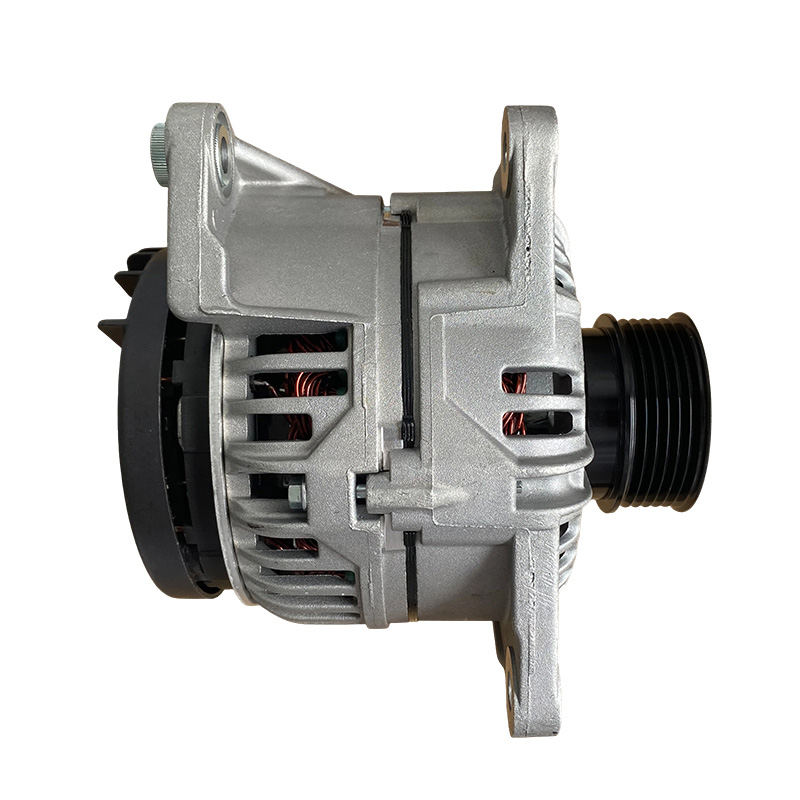
BMW E46 and E39 series — Among the most widely discussed Valeo alternator applications in the aftermarket. The 120A unit (Valeo ref A14VI26) fitted to M47 and M57 diesel variants is a common service item. A direct-fit 12V 120A replacement alternator for BMW E46 and E39 with a 5PK pulley configuration maintains the correct belt alignment and charging profile these engines require.
Renault Laguna II (2001–2007) — The 1.8L and 2.0L petrol variants use a 12V 125A unit (Valeo SG12B055) with a 6PK pulley. Renault's engine management system on this platform is sensitive to voltage regulation stability, making OE-spec replacement important for avoiding fault codes after installation.
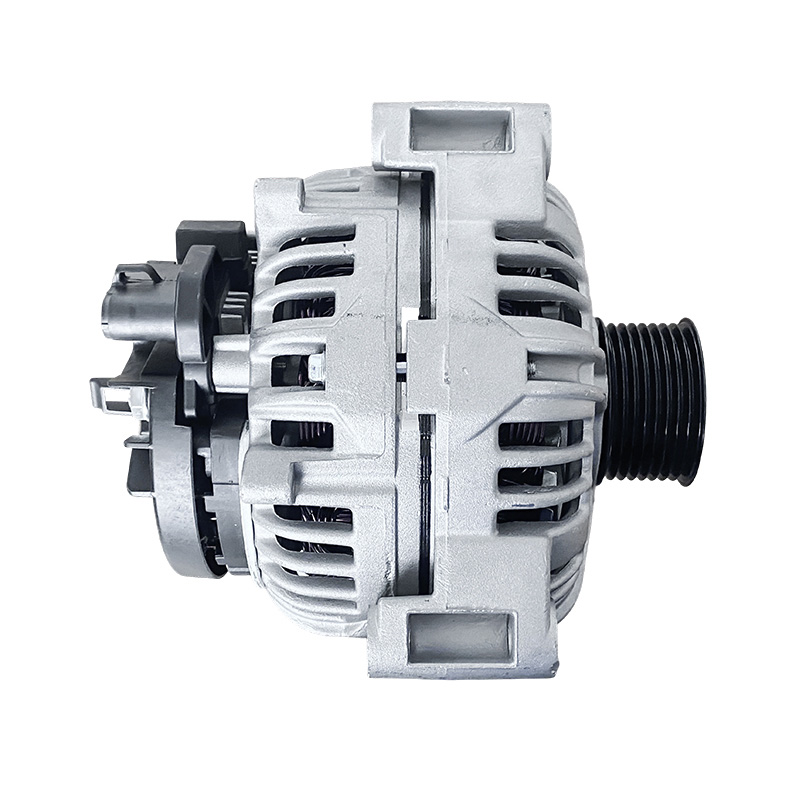
Mercedes-Benz Sprinter (2006–2010) — The Sprinter platform places high continuous electrical demand on the charging system, particularly in commercial upfit configurations. The high-output van alternator for Mercedes Sprinter runs at 12V 220A with a 6PK pulley — one of the higher-output configurations in the passenger/light commercial segment.
Hyundai commercial vehicles — Valeo supplies 24V alternators to Hyundai's HD and XCIENT truck lines. The 70A 8PK unit serves E-COUNTY, HD, and MIGHTY applications, while a 90A 8PK variant covers larger excavator platforms including the R140LC9S and R210LC7. These 24V configurations are distinct from passenger car units and require separate sourcing.
Ford Granada / Scorpio (1991–1998) — An older application still serviced in certain markets. The 12V 100A 6PK unit (Valeo 437774) covers the 2.9L V6 variants and represents the type of long-tail application where OE-spec new replacements are often more reliable than rebuilt units due to core availability issues.
Wuxi Sanyou Auto Electrical Factory has specialized in alternator and starter manufacturing for over 20 years. The facility covers more than 20,000 square meters and operates with an annual production capacity exceeding 500,000 alternator units — a scale that supports consistent quality control rather than batch-by-batch variation.
All Valeo alternator replacements produced by Sanyou use new components throughout. There are no reused cores, no carried-over wear components. Each unit is built to Valeo's OE structural specifications, covering housing dimensions, winding configuration, bearing grade, and regulator calibration.
Quality certification underpins this approach. OEM alternator manufacturing and quality certification at Sanyou is backed by ISO 9000 and IATF 16949 — the automotive-specific quality management standard that governs production consistency, traceability, and process control across the supply chain.
The product range covers passenger car platforms, light commercial vehicles, and industrial applications across all major Valeo reference groups. OEM and ODM configurations are both supported, allowing buyers to source to specific part number requirements or work with Sanyou's technical team to identify the correct replacement for a given application.
For procurement teams and distributors sourcing Valeo alternator replacements at volume, the combination of factory-direct pricing, IATF 16949 certification, and all-new component construction offers a clear alternative to the remanufactured market — with the consistency and traceability that professional aftermarket supply chains require.
Recommended Products
For Exclusive Offers And The Latest Deals, Feel Free To Contact Us!
We will unswervingly implement the tenet of "quality first, customer first, strict management, and creating a famous brand". Professional OEM/ODM Automotive Alternator Manufacturers and Heavy-Duty Truck Alternators Suppliers in China.
Product
Contact Info.
+86-180 5150 2183
+86-0510-83880396
No. 11 QiBei Road, Yuqi Town, Wuxi City, Jiangsu Province, China
 OEM Alternator Supplier Custom Automotive Alternator Truck Alternators Supplier
 English
 Español
 عربى
عربى