English

Need Help Now? Call Us!
+86-0510-83880396
Our team proudly offers an on-time guarantee and a 100% customer satisfaction guarantee.
Contact Online


 2026.07.07
 Industry News
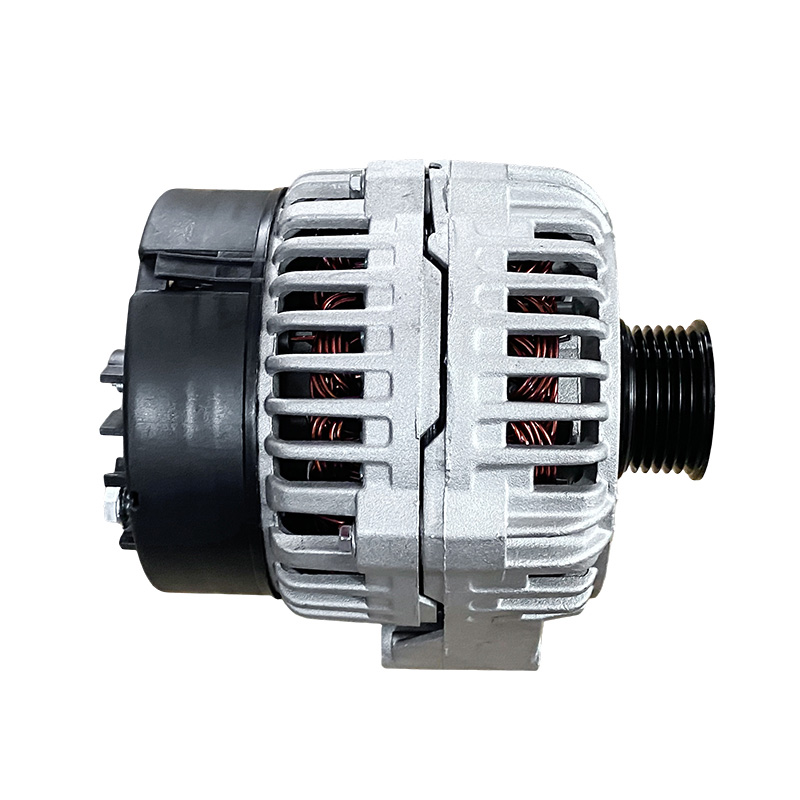
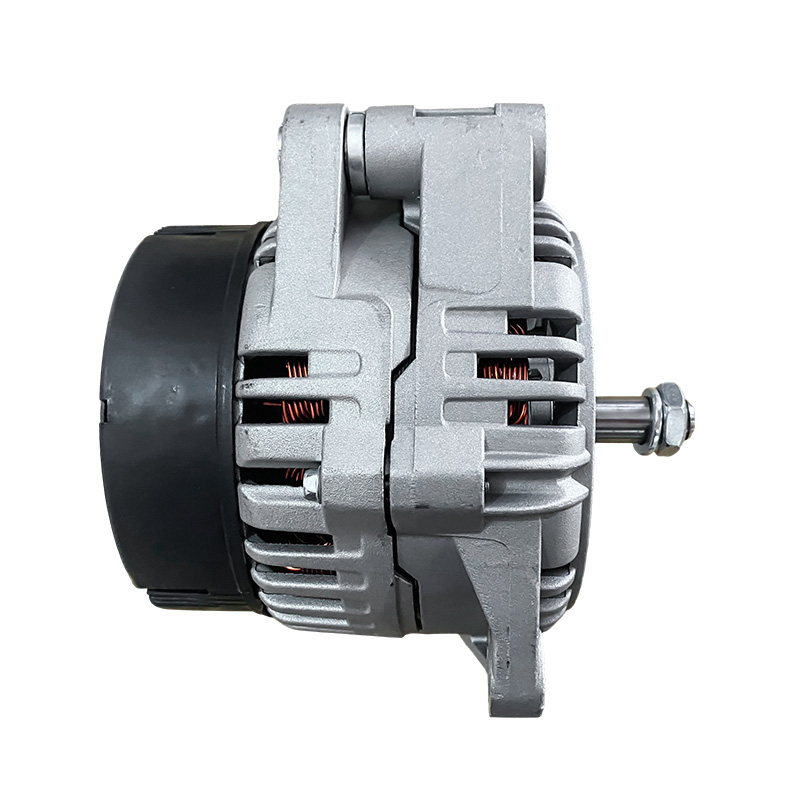
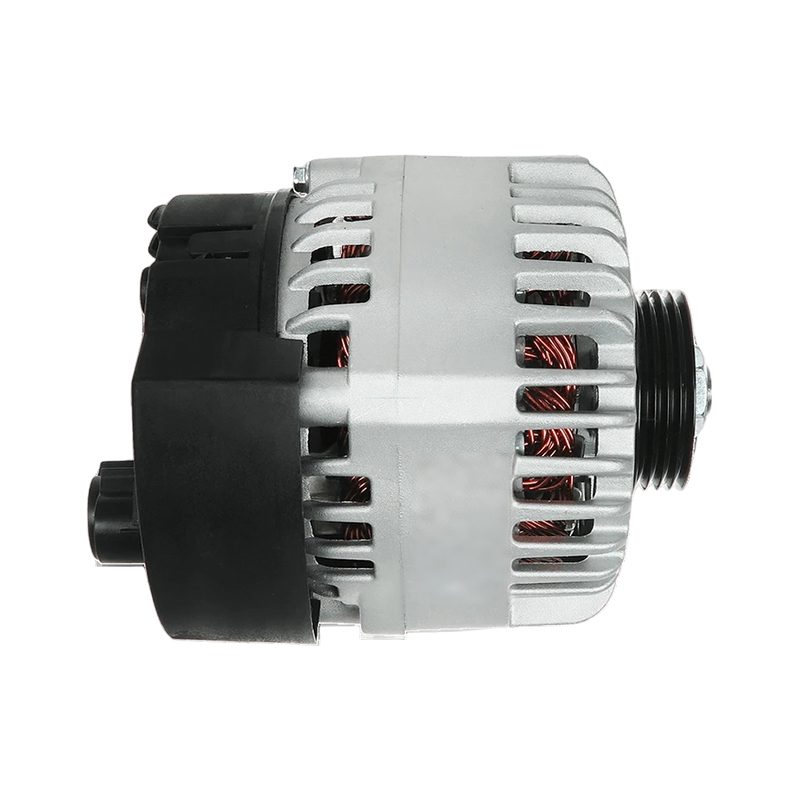
A Magneti Marelli alternator is an Original Equipment manufacturer component fitted to millions of vehicles from the Fiat, Alfa Romeo, Lancia, Maserati, and Ferrari stables, as well as select models from PSA Group, BMW, and commercial vehicle manufacturers. The company, now part of the Marelli Holdings portfolio after the 2019 spin-off from Fiat Chrysler Automobiles, has been a tier-one supplier of rotating electrics since the 1960s. When you replace a failed unit with a genuine Magneti Marelli alternator, you are installing the exact component calibrated to the vehicle's electrical load profile and thermal management system. The critical differentiator from aftermarket generic alternators is that Magneti Marelli units are designed with specific voltage setpoints, response curves, and thermal protection thresholds matched to the ECU-controlled charging strategies of the vehicles they equip.
Content
Magneti Marelli's alternator division supplies both the Fiat-Chrysler legacy brands and an expanding roster of global manufacturers. Understanding which vehicles use these alternators is essential for parts sourcing and cross-referencing. The company produces alternators in output ranges from compact 70-amp units for city cars to heavy-duty 180-amp and higher water-cooled units for performance and luxury applications. The following table maps the major vehicle groups and their typical Magneti Marelli alternator specifications.
| Vehicle Manufacturer | Typical Models | Common Output Range | Notable Feature |
|---|---|---|---|
| Fiat / Abarth | 500, Panda, Punto, Tipo | 70A - 120A | Smart charging via LIN bus on later models |
| Alfa Romeo | Giulia, Stelvio, Giulietta, MiTo | 105A - 180A | Freewheel pulley on diesel applications |
| Lancia / Chrysler | Ypsilon, Delta, Voyager | 90A - 140A | Temperature-compensated regulation |
| Ferrari / Maserati | 458, California, Ghibli, Quattroporte | 150A - 210A | Water-cooled, high-temperature rated |
| Commercial / Iveco | Daily, Eurocargo | 120A - 200A | Dust and vibration-resistant construction |
Modern Magneti Marelli alternators are not standalone devices that simply maintain 14.4 volts. From approximately 2010 onward, the company transitioned its volume production to smart alternators controlled by the Engine Control Unit or a dedicated Battery Management System. These alternators communicate via a LIN bus (Local Interconnect Network) or, on earlier systems, a simple PWM (Pulse Width Modulation) signal. The ECU dictates the target charging voltage dynamically, varying it from as low as 12.5 volts during hard acceleration to reduce parasitic drag, to as high as 15.5 volts during overrun fuel-cut phases for regenerative-style energy recovery.
This fundamentally changes the diagnostic approach. A technician cannot simply test for a fixed 14.2V at idle. The alternator's output voltage may be intentionally low or high depending on the calculated battery state of charge and the vehicle's instantaneous fuel-efficiency strategy. A diagnostic scan tool that can read the ECU's commanded alternator setpoint versus the actual output voltage is essential. A Magneti Marelli alternator that produces a steady 13.5V may be perfectly healthy if the ECU is commanding 13.5V. Conversely, one producing 14.2V may be failing if the ECU is commanding 15V to recharge a depleted AGM battery. The unit's voltage regulator module—often a separate serviceable component on Magneti Marelli designs—is the interface that executes these commands.
Magneti Marelli alternators are generally robust, but several failure patterns recur across the installed base. Understanding these allows for targeted diagnosis rather than speculative parts replacement.
The integrated voltage regulator and brush holder assembly is the highest-failure-rate component in any alternator, and Magneti Marelli units are no exception. The carbon brushes bear against the copper slip rings on the rotor shaft and wear predictably with mileage. A typical brush set lasts between 120,000 and 180,000 kilometers before the spring-loaded brushes lose contact pressure. The symptom is an intermittent charging light that flickers at idle and extinguishes at higher RPM. Because Magneti Marelli designed many of their units with a replaceable regulator module—available separately and secured by two or three screws—this failure can often be repaired without removing the alternator from the vehicle, a significant labor saving.
Diesel and high-compression petrol engines subject the alternator to violent crankshaft speed oscillations. The overrunning alternator pulley (OAP) or overrunning alternator decoupler (OAD) contains a one-way clutch mechanism that allows the alternator to freewheel when the engine decelerates abruptly. When this pulley seizes—a common failure at around 100,000 kilometers—the auxiliary belt tensioner begins to flail violently. The noise is a distinctive chirping or rattling from the belt area, and the tensioner movement is visible with the engine running. A seized pulley transmits torsional vibrations into the alternator shaft, accelerating bearing wear and eventually causing rotor-stator contact. Replacing the pulley as a preventative measure during any timing belt service that involves auxiliary belt removal is a cost-effective strategy.
The rectifier bridge converts the alternator's three-phase AC output into the DC required by the vehicle electrical system. A failed diode—typically caused by a thermal overload from prolonged high-current output or a jump-start event with reversed polarity—results in excessive AC ripple on the DC bus. Measured with an oscilloscope or a multimeter with an AC ripple function, a healthy alternator shows less than 100mV of AC ripple. A failed rectifier diode pushes ripple above 500mV, which causes electrical noise, erratic sensor readings, and premature battery failure. The symptom is often misdiagnosed as a failing battery or ECU glitch because the alternator may still produce a plausible DC voltage reading.
A systematic diagnostic sequence isolates the alternator from the battery and wiring harness, preventing misdiagnosis. The following steps assume a vehicle with a smart charging system; adapt for conventional fixed-voltage systems.
The price differential between a genuine Magneti Marelli alternator and a no-name aftermarket unit is substantial—often a factor of two or three. The justification for the premium is not brand cachet but measurable differences in internal component quality that directly affect service life and electrical performance.
The rotor and stator in a genuine Magneti Marelli unit are wound with high-temperature-class enameled copper wire, typically rated for Class H insulation (180°C continuous). The bearings are sourced from manufacturers like SKF, NSK, or FAG and are selected for the specific radial and axial load profile of the application. The rectifier diodes are avalanche-rated to survive brief voltage spikes. In aftermarket remanufactured or cheap new units, the windings may use a lower class of insulation, the bearings may be generic unbranded components with higher internal clearance, and the voltage regulator module may not contain the correct thermal compensation curve for the specific vehicle. The most common complaint after installing a budget alternator on a smart-charging vehicle is that it works for a few months and then fails—often because the voltage regulator's temperature sensor calibration does not match the ECU's expected profile, causing the unit to be over-driven or under-driven chronically.
A significant proportion of alternator returns under warranty are not manufacturing defects; they are installation-induced failures. Following specific procedures during replacement avoids these premature failures.
The battery must be fully charged before the new alternator is installed. A deeply discharged battery presents a near-short-circuit load to the new alternator, forcing it into maximum output immediately on startup. This thermal shock can damage the rectifier diodes and overheat the stator windings before the engine has even reached operating temperature. Charge the battery independently and verify it reaches at least 12.6V open circuit before connecting the new alternator. Additionally, all high-current connections at the B+ terminal, the engine ground strap, and the battery terminals must be cleaned to bright metal and tightened to the specified torque. A loose or corroded connection creates a resistive hotspot that damages the rectifier and can cause the voltage regulator to overcompensate, driving the system voltage into the overvoltage region and damaging sensitive electronics.
Magneti Marelli is one of the few manufacturers to produce water-cooled alternators for production passenger cars, notably for Ferrari V8 and V12 engines and the Maserati F136 family. These alternators are integrated into the engine's coolant circuit, with the stator housing forming part of a sealed cooling jacket. The advantage is a dramatic reduction in the alternator's physical size and the ability to operate in engine-bay ambient temperatures that would destroy an air-cooled unit. The disadvantage is that any internal coolant leak—usually at the O-ring seals where the coolant passages enter the housing—contaminates the stator windings with conductive coolant, causing an immediate short circuit and catastrophic failure. A water-cooled alternator that has suffered a coolant ingress event is not economically repairable. Preventative replacement of the coolant O-rings during major engine-out services is the standard approach on these high-value engines, with an alternator inspection interval of approximately 60,000 kilometers or 5 years.
Magneti Marelli alternators carry a 10 or 11-digit part number engraved or printed on the housing, along with the amperage rating and a manufacturing date code. This number, not the vehicle manufacturer's OEM part number, is the definitive identifier for cross-referencing. Counterfeit Magneti Marelli units are a known problem, particularly in online marketplaces. Genuine units feature laser-etched, not printed, part numbers on the aluminum housing, a holographic security label on the packaging, and consistent machining marks on the mounting lugs. A counterfeit unit often has a roughly cast housing with casting flash still present on the edges, a printed rather than etched label, and packaging with inconsistent font usage. The weight of a genuine unit is also typically 5 to 10% heavier due to the copper mass in the windings—a cheap counterfeit will substitute thinner-gauge wire or aluminum windings to save cost, and this weight difference is detectable with a simple scale check against the specification for that part number.
Recommended Products
For Exclusive Offers And The Latest Deals, Feel Free To Contact Us!
We will unswervingly implement the tenet of "quality first, customer first, strict management, and creating a famous brand". Professional OEM/ODM Automotive Alternator Manufacturers and Heavy-Duty Truck Alternators Suppliers in China.
Product
Contact Info.
+86-180 5150 2183
+86-0510-83880396
No. 11 QiBei Road, Yuqi Town, Wuxi City, Jiangsu Province, China
 OEM Alternator Supplier Custom Automotive Alternator Truck Alternators Supplier
 English
 Español
 عربى
عربى