English

Need Help Now? Call Us!
+86-0510-83880396
Our team proudly offers an on-time guarantee and a 100% customer satisfaction guarantee.
Contact Online


 Home / News / Industry News / Delco Remy Alternator Guide: SI Series, Specs & Heavy-Duty Applications
  2026.05.26
 Industry News
Over 120 years in service on commercial trucks, buses, and off-highway equipment is a track record that speaks before any spec sheet does. Delco Remy alternators have powered everything from Class 8 long-haul trucks to Caterpillar mining excavators, and the engineering behind that longevity is worth understanding — especially if you're specifying or sourcing alternators for a demanding fleet application.
Content
Delco Remy's history in vehicle electrical systems stretches back to the early twentieth century, when the brand became synonymous with reliable charging systems for American commercial vehicles. Today the brand operates under PHINIA Inc. — itself spun out of BorgWarner — and remains the OE supplier of choice for major commercial truck, bus, and off-highway equipment manufacturers worldwide.
The brand's core market has always been medium and heavy duty. Unlike passenger car alternator manufacturers who occasionally extend their range into commercial applications, Delco Remy was built specifically around the duty cycles, vibration profiles, and electrical demands of heavy commercial equipment. That specialization is reflected in every design decision, from the frame dimensions to the thermal management approach.
DELCO REMY is a registered trademark of General Motors LLC, licensed to PHINIA Technologies Inc. When sourcing units or aftermarket equivalents, this distinction matters for warranty and compatibility verification purposes.
The "SI" designation stands for Systems Integrated — indicating that the voltage regulator is built into the alternator body rather than mounted separately. This design, introduced with the 10SI series decades ago, became an industry standard and remains the architecture underlying every modern Delco Remy commercial alternator.
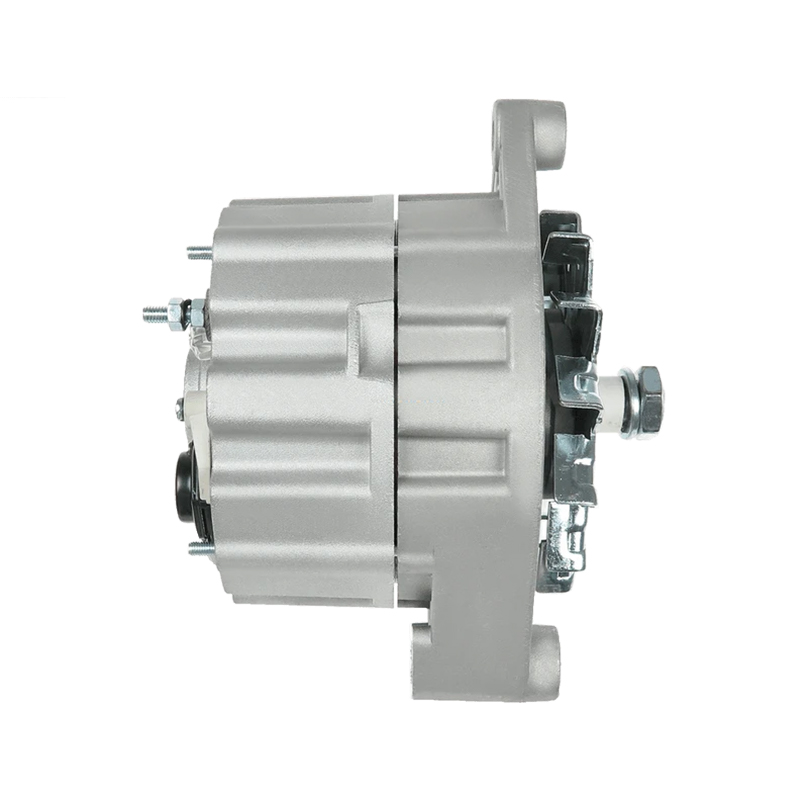
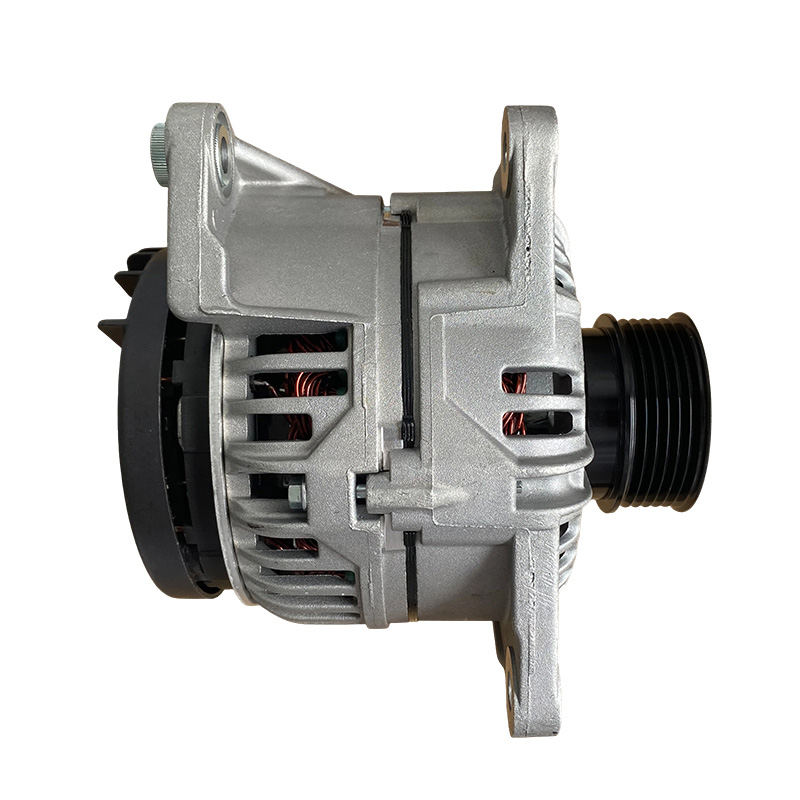
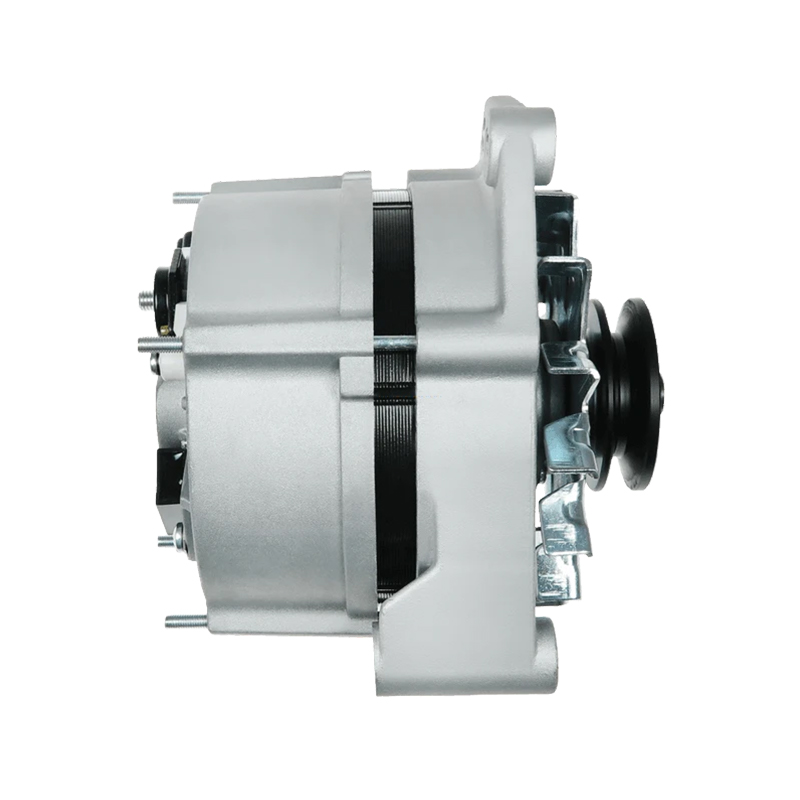
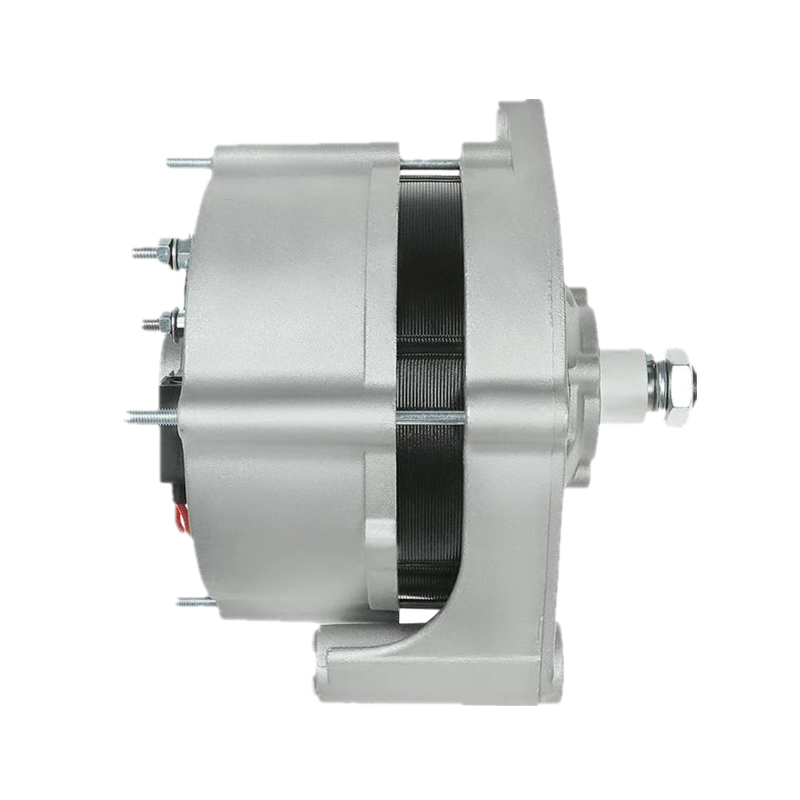
The current lineup spans from the 22SI to the 55SI, covering an output range of 70 to 450 amps across both 12V and 24V platforms. Each model family targets a specific application tier. You can browse Delco Remy alternator replacement units covering the major SI series organized by OEM part number and application.
| Model Family | Type | Voltage | Output | Primary Application |
|---|---|---|---|---|
| 22SI / 24SI / 28SI | Brush | 12V / 24V | 70–160A | Medium duty trucks, transit buses |
| 33SI / 34SI / 35SI | Brushless | 12V / 24V | 145–200A | Heavy duty on-highway, emergency vehicles |
| 36SI / 38SI | Brushless | 12V / 24V | 200–270A | Construction equipment, school buses |
| 40SI / 55SI | Brushless | 12V / 24V | 320–450A | Heavy off-highway, transport refrigeration |
Brush-type models (22SI, 24SI, 28SI) remain widely used for medium-duty applications where the duty cycle is moderate and budget considerations favor a proven, lower-cost platform. The brushless families — which make up the majority of the current lineup — are the default choice for any application where uptime and extended service intervals are priorities. Consult the heavy-duty truck alternator types and specifications guide for a detailed breakdown of selection criteria across duty cycles.
Two technology differentiators define the upper end of the Delco Remy lineup: brushless design and Remote Sense voltage regulation. Both address real operational costs rather than abstract engineering metrics.
Brushless alternators eliminate the carbon brush and slip ring assembly — the components most likely to wear and require replacement in a conventional unit. Fewer moving parts directly translates to longer service intervals, less maintenance labor, and fewer unplanned failures. In a fleet context where each vehicle might accumulate 150,000 to 200,000 miles annually, eliminating one failure mode from the maintenance schedule has measurable value.
The thermal management advantage is equally significant. Brushless designs run cooler under sustained high-load operation, which matters on routes where the alternator is pulling maximum current for extended periods — refrigerated transport, emergency vehicles with lights and equipment running continuously, or transit buses with full climate control loads in summer.
Remote Sense technology addresses a different problem: voltage drop across wiring between the alternator and the batteries. In a standard system, the alternator regulates voltage at its own output terminal. If there's a 0.5V drop through the wiring, the batteries receive less than the target charge voltage, extending charge time and risking undercharging. Remote Sense moves the regulation sensing point to the battery itself, compensating for wiring losses automatically. The practical result, according to Delco Remy's own data, is battery charge time reduced by up to 50% compared to conventional regulation — a meaningful difference for vehicles with high electrical demands and limited idle time between runs.
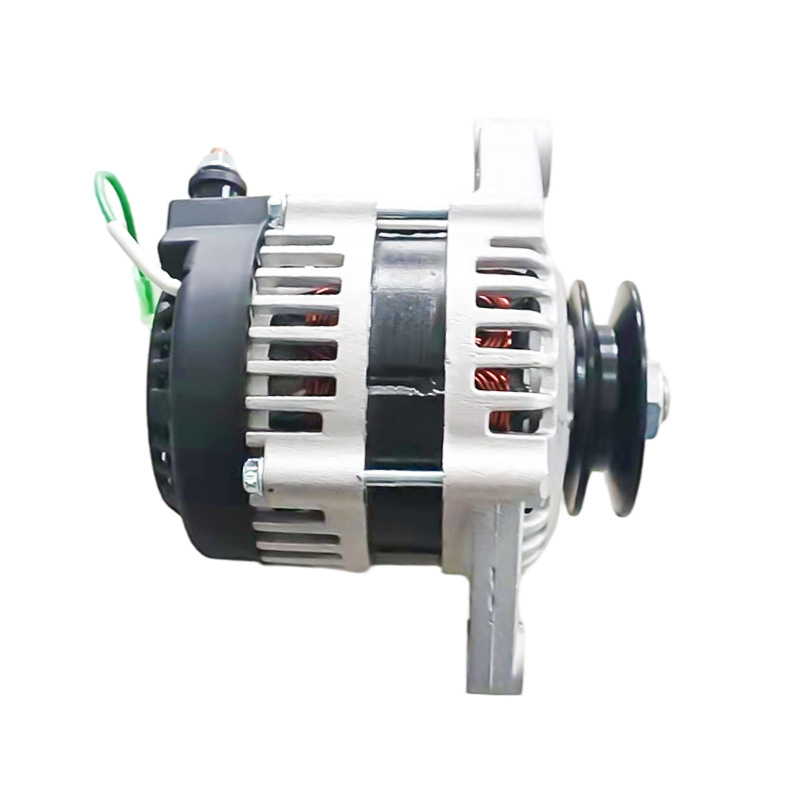
Delco Remy alternators appear as OE components across a broad cross-section of commercial equipment. On the highway side, they're specified by major truck OEMs for Class 6 through Class 8 vehicles running Cummins ISX, Detroit Diesel S60, Caterpillar C15, and MaxxForce powertrains. The 35SI and 36SI series are particularly common in this segment.
Off-highway applications include Caterpillar excavators, wheel loaders, and motor graders where the 24V platform dominates. Caterpillar's own part numbering system (prefixed with 8600XXX, 8700XXX) cross-references directly to Delco Remy SI series units — a practical detail that simplifies fleet maintenance sourcing. You'll find a comprehensive range of Caterpillar-compatible alternator units with full Delco Remy cross-references available for the most common machine models.
Transit buses and school buses represent another significant segment, where the combination of high continuous electrical loads and strict uptime requirements makes the 35SI and 28SI the go-to specifications. Emergency vehicles — fire apparatus, ambulances — often require the 40SI or 55SI for the sustained high-amperage output needed to power communications, lighting bars, and medical equipment simultaneously.
Fleets that also need starter motor coverage for the same equipment will find Delco Remy starter motors for heavy equipment applications covering the 39MT, 41MT, and 42MT series that pair with many of the same engine and vehicle platforms.
Selection starts with the OE spec code — a Delco Remy-specific identifier that captures the exact configuration of the unit as originally fitted: voltage, output, mounting pad orientation, rotation direction, and connector type. For aftermarket sourcing, the 8600XXX and 8700XXX Caterpillar cross-references, or the 7XXX and 8XXX WAI/Remy part numbers, are the most reliable starting points for fleet maintenance teams.
A few practical selection rules apply across the lineup. First, never downgrade output when replacing a unit. If the OE unit was a 160A 35SI and a lower-output alternative is offered at a lower price, the electrical system was designed around the higher output — running a lighter unit under the same load will shorten its service life significantly. Second, verify the mounting configuration: Delco Remy SI units are available in multiple pad mount and ear mount configurations, and the wrong mounting style won't fit the bracket without modification. Third, confirm rotation direction — most applications run clockwise, but some configurations require counter-clockwise rotation.
For fleet operators managing mixed equipment across Caterpillar, Cummins, and truck platforms, consolidating alternator sourcing with a specialist supplier offers real efficiency gains. A supplier with deep stock in the Delco Remy SI series can handle the full cross-reference database, ship against OEM part numbers, and provide application support when the spec sheet alone doesn't answer the question. Downtime in commercial transport and construction isn't a theoretical cost — it's a measurable daily figure. Having the right alternator on the shelf before the failure happens is the most effective way to keep that number as low as possible.
Recommended Products
For Exclusive Offers And The Latest Deals, Feel Free To Contact Us!
We will unswervingly implement the tenet of "quality first, customer first, strict management, and creating a famous brand". Professional OEM/ODM Automotive Alternator Manufacturers and Heavy-Duty Truck Alternators Suppliers in China.
Product
Contact Info.
+86-180 5150 2183
+86-0510-83880396
No. 11 QiBei Road, Yuqi Town, Wuxi City, Jiangsu Province, China
 OEM Alternator Supplier Custom Automotive Alternator Truck Alternators Supplier
 English
 Español
 عربى
عربى