English

Need Help Now? Call Us!
+86-0510-83880396
Our team proudly offers an on-time guarantee and a 100% customer satisfaction guarantee.
Contact Online


 Home / News / Industry News / Alternator Replacement Cost: Real Price Ranges by Vehicle and Equipment Class
 2026.11.23
 Industry News
A $520 quote for a compact sedan and a $1,900 quote for a 90-ton rigid dump truck can both be fair prices for an alternator replacement. The hardware is the same category of part; almost nothing else about the two jobs is. Amperage, the hours needed to reach the mounting bracket, and the number of OE numbers the unit has to satisfy move the number far more than the logo on the box.
Those bands assume a new OE-equivalent or a quality remanufactured unit fitted at an independent shop. Dealer labor rates push the top of each band up by a quarter to a third, while a used unit swapped in at home can drop below the bottom — at the cost of warranty and, often, a second failure inside two years.
Content
Read a quote as three separate purchases, because each one is negotiable in a different way.
Same amperage, three price tiers — new OE-equivalent, remanufactured, aftermarket copy. On a 120A passenger unit the gap between the cheapest copy and the OE-equivalent is routinely $150–$300, and warranty length follows the price almost exactly.
Charged in book hours, not clock hours. A transverse engine with the alternator on top books 1.0–1.5 hours; a longitudinal diesel with the cooling pack in the way books 2.5–3.5. Ask for the book time in writing before approving anything.
A refundable core deposit of $40–$150 rides on the old unit, plus belt, tensioner or cable-end hardware if the failure ran hot. The deposit returns only if the housing and shaft are reusable, so a cracked case quietly becomes a permanent cost.
Use this as a sanity check before approving a quote. Figures are typical independent-shop ranges in US dollars, parts plus book labor.
Two alternators with identical mounting points and identical voltage can still differ by several hundred dollars. Four variables explain nearly all of it.
A 70A compact unit and a 150A tow-package unit share a footprint, not a rectifier. Larger diodes, more copper and heavier cooling add 40–60% to the part price before a single hour of labor is booked.
Fixed-voltage, self-exciting, or ECU-controlled through a LIN or BSS line. The last type costs more to buy and more to diagnose, because a communication mismatch can mimic a failed alternator and trigger a needless swap.
Overrunning decoupler pulleys, 6PK to 12PK belts and pulley diameters from 49.5 mm to 93 mm are orderable differences. Fit the wrong pulley and a $300 part turns into a belt-eating problem with a second labor bill attached.
Reman sits 25–40% below new. It is the right call on high-hour equipment where the housing survives, and the wrong one when the original died from heat soak and the core is already distorted.
Whether a unit comes from a production line or a rebuilder's bench matters less than the test sheet that travels with it. Asking about the production and testing setup behind the part is a fair question for any supplier, and the answer usually explains the price difference faster than the catalog does.
Part prices are visible and easy to compare. Access time is invisible until the invoice appears, which is why the same failure can cost twice as much on two machines.
At a $120 hourly rate, the difference between a 1.2-hour and a 3.5-hour job is $276 — more than the price gap between a budget copy and a proper replacement on many passenger cars. On equipment, access dominates the quote and the part becomes the smaller decision.
Across a mixed sample of passenger, truck and off-highway jobs, the invoice splits roughly like this.
The lesson is practical: negotiating the part price by 10% saves about 5.6% of the total, while cutting an unnecessary hour of access time saves nearly three times as much. Fault-finding quality matters more than discount hunting.
Voltage gets the attention, but the OE number is the only field that has to be right. Amperage, pulley groove count and pulley diameter then confirm the exact variant rather than a near neighbour: 12V 55A with a single 72 mm groove is a different order line from 12V 55A with a 6PK 56 mm pulley, even when both bolt to the same block. Passenger applications with air conditioning and heated screens are the most common place where the wrong output gets fitted.
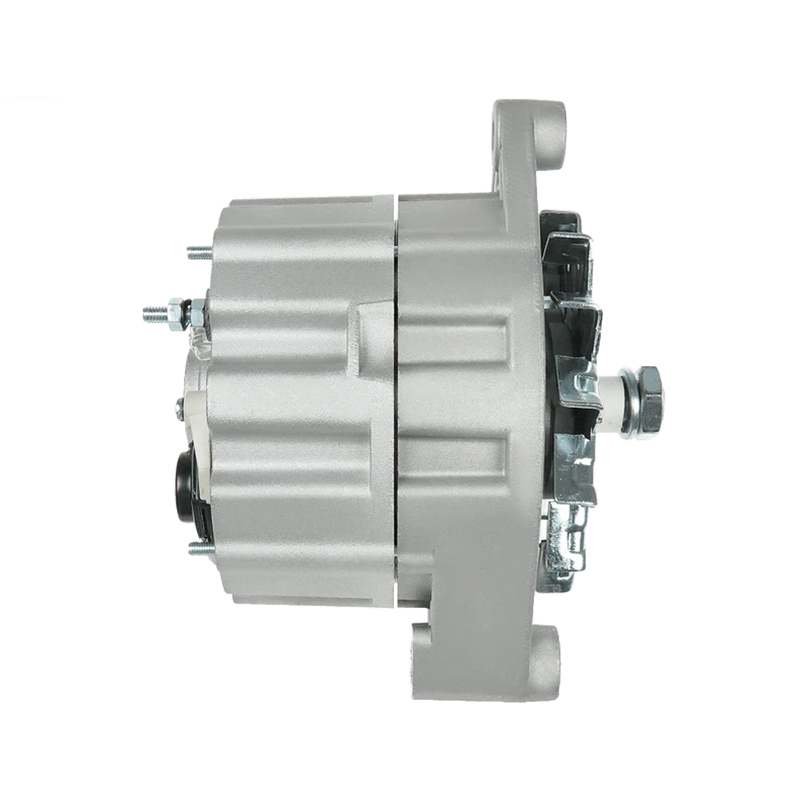
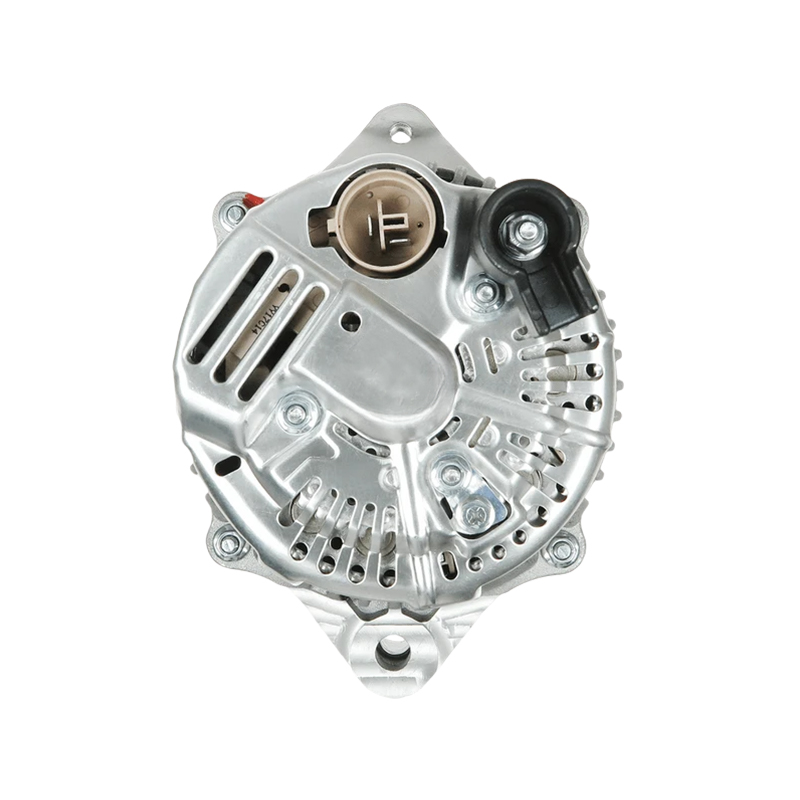 Denso-Type 12V 100A Alternator for Jeep 2.5 TDMatches ALN0105 and Jeep Cherokee/Grand Cherokee 2.5 TD applications, with 12V 100A output, 8 grooves and 57 mm pulley for exact variant checking.View Product →
Truck and bus work adds a second layer: 24V systems with 8PK or 10PK pulleys, 90A to 150A output, and brackets that differ between cab-over and conventional chassis. A quote that lists only “24V alternator” without a cross-reference cannot be audited later, and that is where rework costs start.
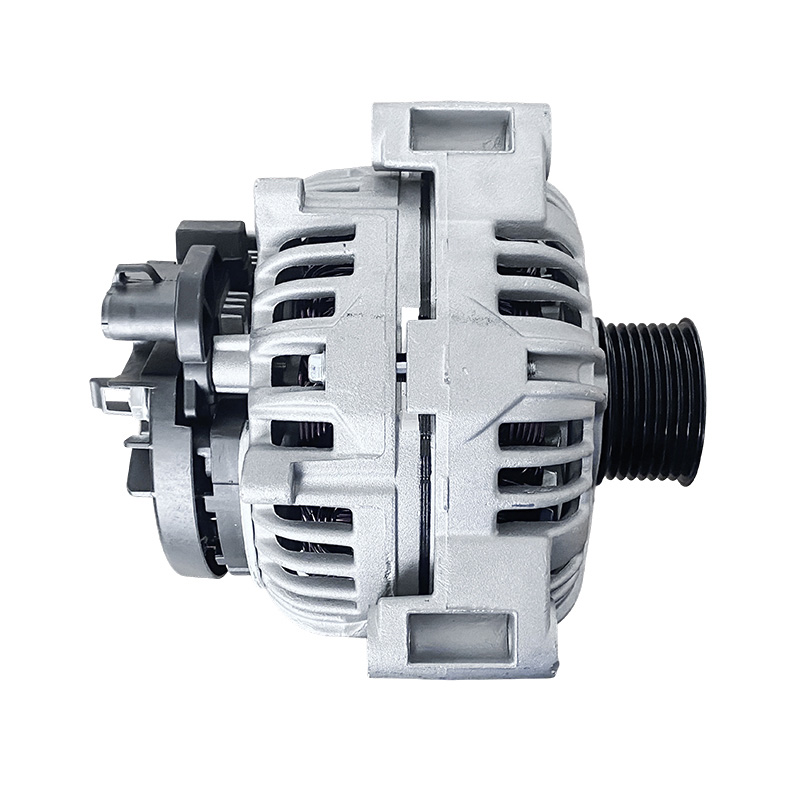
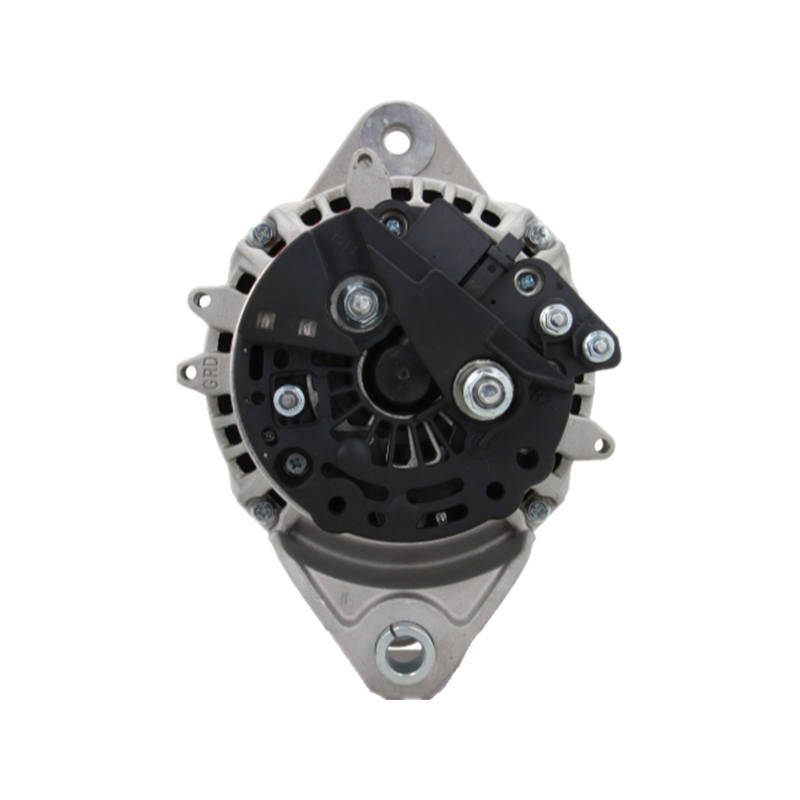 24V 120A Bosch-Style Alternator for Caterpillar EquipmentCovers Bosch and Caterpillar reference numbers for D6R, D7T, C7/C9 and related machines, offering 24V 120A output for off-highway charging system matching.View Product →
Off-highway machines sit at the expensive end. A 24V 90A unit on a rigid dump truck can carry $600–$900 of part value before anyone opens the engine cover, and access time often doubles the labor line. Match machine serial number and OE number together, because the same model year can ship with two different charging systems. For a fuller specification checklist covering truck, agricultural and construction units, this alternator buyer's guide walks through pulley and amperage matching in more depth.
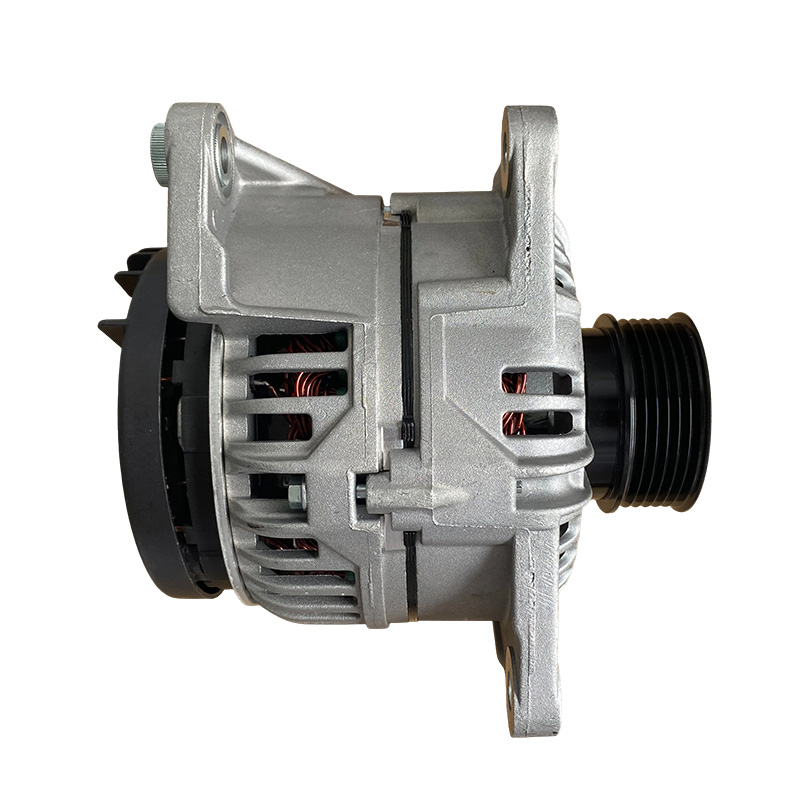
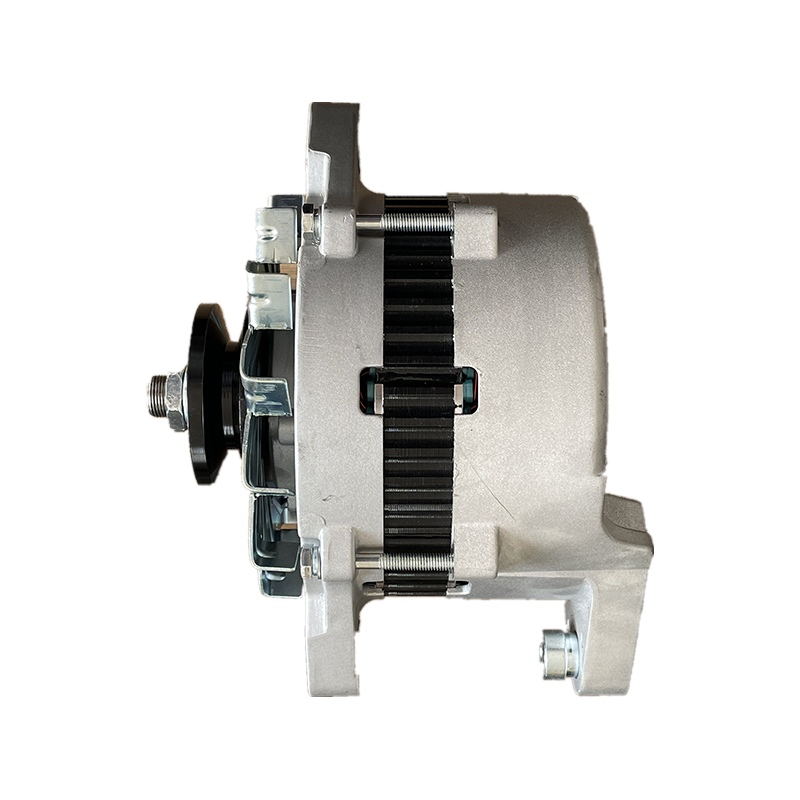 Nikko 24V 90A Alternator for Komatsu HD465 Dump TruckOffers 24V 90A output, single-groove 95 mm pulley and Komatsu/Nikko cross-references for HD465 rigid dump truck applications where exact OE matching matters.View Product →
A replacement alternator is usually a symptom, not the disease. The second failure is what turns a $600 job into a $1,200 one.
Alternator replacement cost is predictable once you separate the three lines and check the OE number before anything is ordered. A fair quote names the variant, states the book hours and explains the core terms — and on that basis, a $520 sedan job and a $1,900 machine job can sit comfortably in the same spreadsheet.
Recommended Products
For Exclusive Offers And The Latest Deals, Feel Free To Contact Us!
We will unswervingly implement the tenet of "quality first, customer first, strict management, and creating a famous brand". Professional OEM/ODM Automotive Alternator Manufacturers and Heavy-Duty Truck Alternators Suppliers in China.
Product
Contact Info.
+86-180 5150 2183
+86-0510-83880396
No. 11 QiBei Road, Yuqi Town, Wuxi City, Jiangsu Province, China
 OEM Alternator Supplier Custom Automotive Alternator Truck Alternators Supplier
 English
 Español
 عربى